
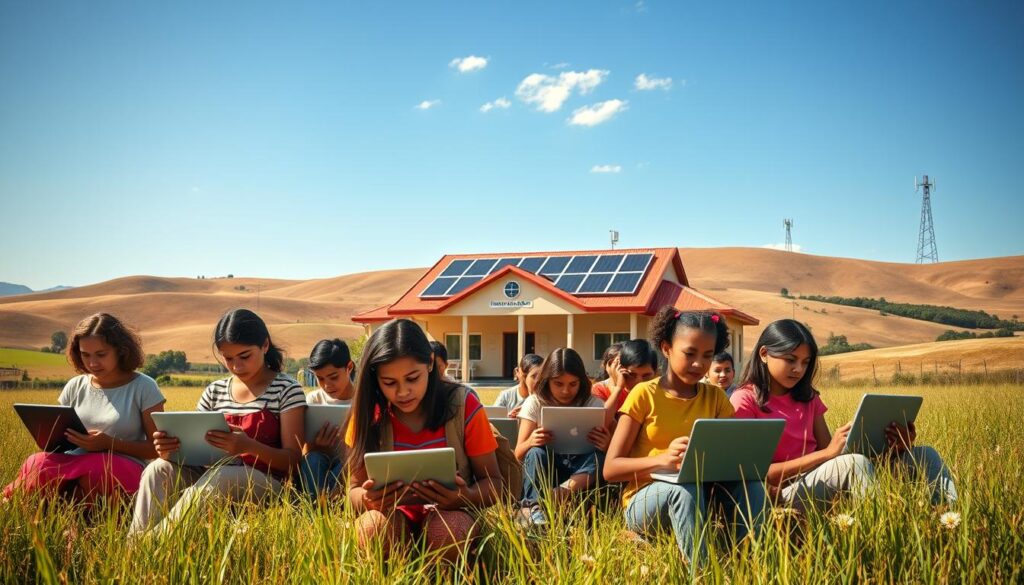
Imagine trying to stream a science lesson while your connection buffers like it’s 1999. That’s the daily reality for many rural school districts across America.According to FCC data, 25% of countryside communities lack Internet speeds of at least 50 Mbps. Urban areas? Just 2%. This isn’t just about slow Netflix – it’s about educational equity.The…
Imagine trying to stream a science lesson while your connection buffers like it’s 1999. That’s the daily reality for many rural school districts across America.
According to FCC data, 25% of countryside communities lack Internet speeds of at least 50 Mbps. Urban areas? Just 2%. This isn’t just about slow Netflix – it’s about educational equity.
The “last mile” concept takes on new meaning here. It’s not about distance, but about systemic neglect. Rugged terrain and infrastructure costs make providers run for the urban hills.
While some nations like Canada are making strides toward universal connectivity, many American students are left in the digital dark ages. They’re trying to learn 21st-century skills with 20th-century tools.
This connectivity gap isn’t just inconvenient. It’s preparing our next generation for an economy that’s already left their classrooms behind.
Innovative Solutions (Hotspots, TV White Space)
Let’s talk about the digital duct tape and bubble gum holding rural education together. While urban schools debate fiber optic speeds, we’re out here playing technological MacGyver with whatever’s available. The creativity happening in connectivity-challenged communities would make NASA engineers blush.

Beyond Traditional Broadband
Forget everything you know about standard internet infrastructure. We’re working with educational first aid kits here – immediate, practical solutions that keep learning alive. These aren’t perfect permanent fixes, but they’re keeping classrooms connected when traditional options fail.
Hotspots
Mobile hotspots have become the digital lifeblood for rural students. These portable connectivity devices turn buses into rolling study halls and parking lots into instant classrooms. They’re the Band-Aids of internet access education – not elegant, but incredibly effective in emergencies.
Schools are deploying hotspot lending programs that function like digital library books. Students check out connectivity for homework assignments, research projects, and virtual class participation. It’s not ideal, but it beats driving twenty miles to the nearest McDonald’s for Wi-Fi.
TV White Space
Now here’s where things get really interesting. TV white space technology uses unused broadcast spectrum – think of it as finding parking spots in a crowded digital city. This isn’t some theoretical concept; it’s actively bridging connectivity gaps across rural America.
The technology leverages frequencies between television channels to deliver internet signals over long distances and rough terrain. It’s like having a super-powered Wi-Fi that doesn’t care about hills, trees, or distance. For remote communities, this isn’t just convenient – it’s revolutionary.
What makes TV white space brilliant is its ability to reach areas where fiber optic cables would be too expensive. We’re talking about bringing internet access education to places that telecom companies wrote off as unprofitable decades ago.
The global push for rural connectivity has accelerated these innovations, proving that when we get creative, we can solve problems that once seemed impossible. It’s watching communities build suspension bridges with digital dental floss and pure determination.
Dark fiber networks spanning 130,000 route miles offer another hidden resource. These unused fiber optic cables represent a chance for connectivity. The Connect to Innovate Program has already funded 194 projects focusing on this backbone infrastructure and last-mile access.
While hotspots provide temporary relief, these larger infrastructure projects represent the surgical precision needed for permanent solutions. The combination of immediate fixes and long-term planning creates a solution that works for rural America.
Funding Sources
Let’s explore the financial side of digital connections. It seems like digital connectivity doesn’t grow on trees. But, it feels like we’re waiting for it to sprout. The funding for rural school broadband is complex, like a financial thriller.
The Infrastructure Investment and Jobs Act provided $65 billion for broadband. This adds to programs like the FCC’s Universal Service and USDA’s Rural Utilities Service. It’s like finding a winning lottery ticket, but the real challenge is in how the money is distributed.
I’ve looked into funding patterns that would make Wall Street analysts blink. The numbers tell a fascinating story:
| Program | Funding Amount | Coverage Type | Target Communities |
|---|---|---|---|
| Infrastructure Act | $65 billion | Broadband expansion | Nationwide rural areas |
| Connect to Innovate | $483 million | Backbone infrastructure | Remote educational institutions |
| Connecting Canadians | $207 million | Last-mile connectivity | Northern communities |
| USDA Rural Utilities | Varying grants | Infrastructure development | Agricultural regions |
Funding ratios create a strange equation for educational equity. Some areas get 50% cost-sharing, while others get 100% coverage. Your ZIP code shouldn’t decide your digital future.
Getting this money is like solving a puzzle blindfolded. The application process is as confusing as a maze.
The Connect to Innovate Program’s $483 million budget is more than just numbers. It’s the difference between students accessing digital libraries and facing loading screens. It’s the gap between interactive learning and feeling isolated.
We’re running a nationwide Kickstarter campaign for basic educational infrastructure. Some communities are waiting for their stretch goals, while others have already unlocked all the bonus features.
Understanding rural broadband funding is key for schools and communities. The funding models vary based on location and need, creating a patchwork quilt of solutions.
Some programs focus on backbone infrastructure, while others target last-mile connectivity. The USDA’s Rural Utilities Service works with local providers, while federal programs coordinate with state governments.
This creates a complex ecosystem of funding streams. Schools need to know which programs fit their needs and challenges.
For rural school broadband projects, timing is everything. Funding windows open and close quickly. Missing your chance means waiting for the next opportunity.
Funding alone won’t solve the connectivity crisis. It requires strategic planning, community engagement, and technical expertise. Without enough funding, even the best plans remain dreams.
As we move forward, we need to focus on ensuring funds reach the communities that need them most. The success of rural school broadband initiatives depends on both the amount of funding and how it’s distributed.
Community Partnerships
Watching rural communities tackle connectivity is like seeing a digital barn raising. Everyone contributes their skills – schools offer space, local ISPs provide tech help, and retired engineers do maintenance. It’s a mix of neighborhood block parties and Silicon Valley startup vibes.
These partnerships make internet access real for everyone. The Canadian government’s multi-agency coordination between ISED, Infrastructure Canada, and Indigenous Services is a rare sight. They help communities map out assets like unused poles and local tech talent.
Public-private partnerships solve the ROI problems that left rural areas behind. Schools become hubs for internet, hospitals get telehealth, and libraries become digital literacy centers. This teamwork makes internet access a lasting solution, not just a temporary fix.
When communities take charge, amazing things happen. They build strong networks instead of looking for quick fixes. This shows that even the most remote classrooms can enter the 21st century with everyone’s help.
James develops culturally responsive teaching frameworks and equity audit tools used by
over 150 school districts. A former high school teacher, he brings classroom experience to…