

The materials students encounter in classrooms—textbooks, reading lists, historical narratives, visual imagery, and case studies—do more than deliver academic content. They shape how students see themselves within the broader story of society. When learning materials consistently reflect a narrow set of perspectives, many students struggle to find meaningful connections between their own experiences and the…
The materials students encounter in classrooms—textbooks, reading lists, historical narratives, visual imagery, and case studies—do more than deliver academic content. They shape how students see themselves within the broader story of society.
When learning materials consistently reflect a narrow set of perspectives, many students struggle to find meaningful connections between their own experiences and the subjects they study. Over time, this disconnect can influence engagement, participation, and academic confidence.
Representation in curriculum is therefore not simply a matter of cultural acknowledgment. It is a structural factor that influences belonging and academic motivation. When students encounter diverse perspectives in the learning process, they are more likely to view education as relevant to their lives and communities.
Inclusive curriculum design recognizes that who is represented in educational materials affects how students experience learning itself.
The Research Behind Inclusive Curriculum Design
Research in education and cognitive development has repeatedly shown that culturally responsive learning environments improve both engagement and academic outcomes. When students see their identities and histories reflected in classroom materials, they are more likely to participate actively and develop a stronger sense of belonging.
The American Psychological Association’s research on culturally responsive education highlights that representation in curriculum can strengthen student motivation and improve classroom climate. Inclusive materials help students connect prior knowledge and lived experiences to academic concepts, reinforcing deeper understanding.
Importantly, inclusive curriculum benefits all students—not only those from historically underrepresented communities. Exposure to multiple perspectives encourages critical thinking, empathy, and broader cultural literacy, skills that are essential in increasingly interconnected societies.
How Traditional Curriculum Models Can Limit Representation
Many traditional curriculum frameworks were developed decades ago, often reflecting dominant cultural narratives and historical perspectives that excluded significant portions of society. While curriculum updates occur periodically, systemic representation gaps can persist.
Common limitations include:
- Historical narratives centered on a limited set of cultural viewpoints
- Literary canons dominated by a narrow group of authors
- Science and innovation examples that overlook diverse contributors
- Social studies materials that omit community histories and local experiences
When these patterns accumulate across grade levels, they reinforce the perception that only certain voices or experiences are academically valued.
Inclusive curriculum development addresses this imbalance by expanding the range of perspectives included in teaching materials.
Key Elements Of Inclusive Curriculum Development
Designing inclusive learning materials requires intentional planning rather than occasional adjustments. Effective frameworks typically include several interconnected components.
Diverse Perspectives In Core Content
Representation should be embedded in core subject matter rather than confined to special topics or heritage months. Literature selections, historical case studies, and scientific contributions can all reflect broader societal participation.
Culturally Relevant Examples
Students often grasp complex concepts more effectively when examples relate to familiar cultural or community contexts. Integrating locally relevant narratives can strengthen conceptual understanding while honoring community knowledge.
Balanced Historical Narratives
Inclusive curriculum design does not erase traditional narratives; instead, it expands them. Presenting multiple perspectives helps students develop critical thinking skills and a deeper understanding of historical complexity.
Ongoing Curriculum Review
Representation evolves as societies change. Schools that prioritize inclusive curriculum typically conduct periodic reviews of learning materials to ensure content reflects current scholarship and diverse perspectives.
The Impact Of Representation On Student Engagement
Student engagement is influenced by more than instructional methods. The content itself plays a significant role.
When students recognize themselves and their communities in learning materials, they are more likely to perceive education as relevant. This sense of relevance can translate into increased participation, stronger academic persistence, and improved classroom dynamics.
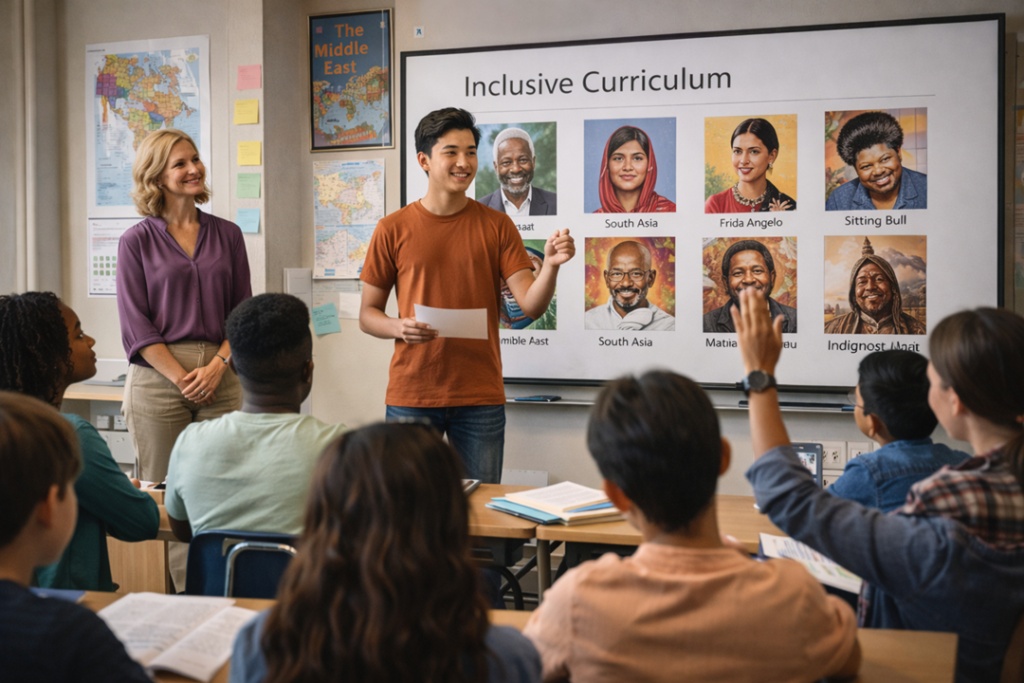
The relationship between representation and engagement is particularly important when considering broader prevention strategies in education. Disengagement often develops gradually. Inclusive curriculum design can reduce this risk by strengthening students’ connection to the learning process from the beginning.
Representation, in this sense, functions as a preventative strategy rather than simply a symbolic one.
Curriculum Representation And Educational Equity
Representation gaps often mirror broader educational inequities. Schools serving diverse populations may rely on materials that fail to reflect the experiences of the students they serve. Over time, this mismatch can reinforce feelings of exclusion or marginalization.
Inclusive curriculum development helps address these opportunity gaps by ensuring that learning materials reflect the diversity of modern classrooms.
The following table illustrates how representation influences key aspects of student learning environments:
| Curriculum Element | Impact On Learning |
|---|---|
| Diverse authors and scholars | Expands intellectual role models for students |
| Multicultural historical narratives | Encourages critical analysis of social systems |
| Inclusive imagery and examples | Strengthens student identification with content |
| Community-connected case studies | Reinforces relevance and applied learning |
When representation becomes a consistent feature of educational materials, students gain a broader understanding of both knowledge and society.
The Role Of Educators In Curriculum Inclusion
Teachers play a central role in translating curriculum frameworks into classroom practice. Even when official materials are limited, educators often supplement instruction with additional readings, multimedia resources, and discussion topics.
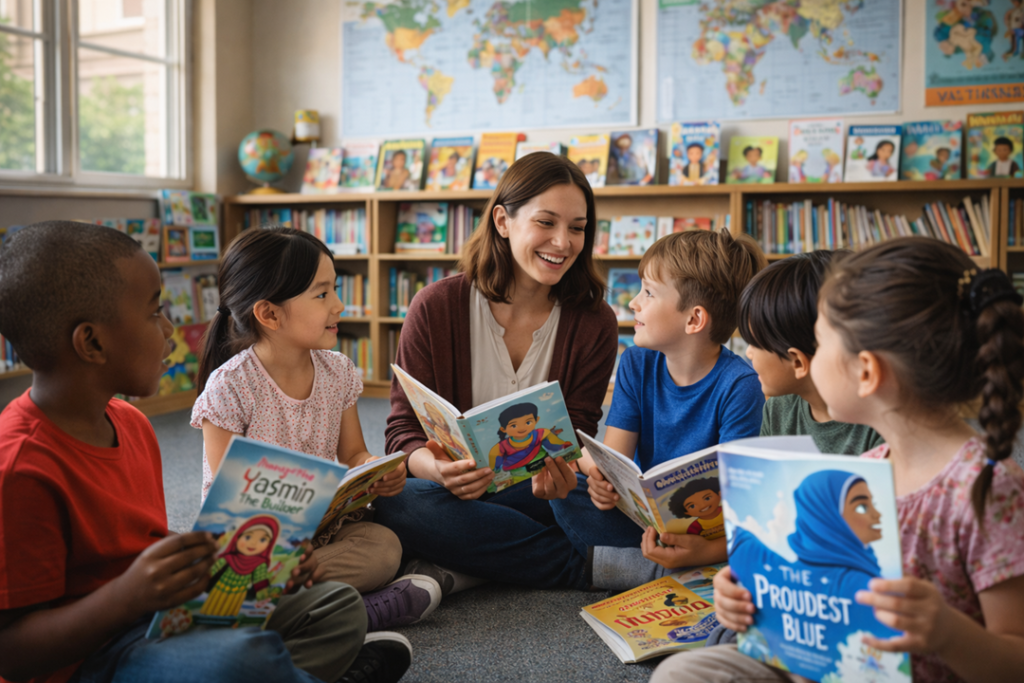
Professional development programs increasingly emphasize culturally responsive teaching strategies that help educators incorporate diverse perspectives into instruction. These approaches focus not only on content selection but also on classroom dialogue, collaborative learning, and contextualized instruction.
Inclusive curriculum therefore emerges through a combination of institutional design and educator expertise.
Policy And Institutional Support For Inclusive Materials
Sustainable curriculum reform requires more than individual classroom efforts. District policies, state standards, and textbook adoption processes all influence which materials reach students.
Many education systems have begun implementing curriculum review committees that evaluate representation and cultural responsiveness as part of their selection criteria. These reviews often involve educators, scholars, and community representatives.
Institutionalizing these review processes ensures that representation remains an ongoing priority rather than an occasional initiative.
Preparing Students For A Diverse Society
Education does not occur in isolation from society. Classrooms serve as spaces where students learn to interpret history, evaluate information, and interact with people from different backgrounds.
An inclusive curriculum prepares students for these responsibilities by exposing them to diverse perspectives and experiences. Rather than narrowing the scope of education, representation expands intellectual inquiry.
Students who encounter a wider range of ideas, histories, and cultural contributions develop stronger analytical skills and a deeper appreciation for social complexity.
Representation As A Foundation For Meaningful Learning
Curriculum design shapes more than lesson plans. It shapes how students understand knowledge, identity, and opportunity.
When representation is thoughtfully integrated into learning materials, classrooms become environments where all students can see themselves as participants in academic inquiry. Engagement increases, dialogue deepens, and learning becomes more meaningful.
Inclusive curriculum design therefore represents more than a pedagogical adjustment. It is a structural commitment to educational equity—one that recognizes the importance of ensuring that every student can see both their present and their potential reflected in the story of learning.
James develops culturally responsive teaching frameworks and equity audit tools used by
over 150 school districts. A former high school teacher, he brings classroom experience to…