
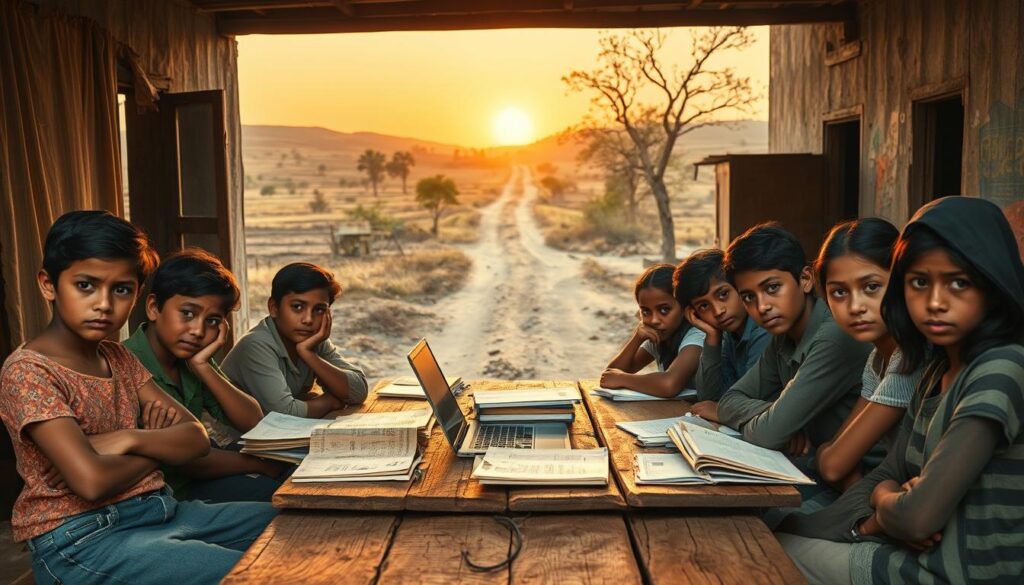
Imagine trying to learn advanced math without electricity in a classroom. This isn’t from a sci-fi book; it’s a reality for millions of American kids. While cities debate STEM vs. STEAM, rural schools just want basic tools like blackboards.Statistics are harsh: 24% fewer students finish school, and 30% more drop out. Why? The buildings are…
Imagine trying to learn advanced math without electricity in a classroom. This isn’t from a sci-fi book; it’s a reality for millions of American kids. While cities debate STEM vs. STEAM, rural schools just want basic tools like blackboards.
Statistics are harsh: 24% fewer students finish school, and 30% more drop out. Why? The buildings are old, and teachers are scarce. It’s like stepping back into the Victorian era.
This isn’t just about education; it’s a huge gap. Research shows there’s more. Limited medical care and fewer life experiences due to isolation add to the problem.
We must face these challenges head-on. Let’s start by recognizing the hurdles to quality education for rural students.
Case Studies
Imagine if some of the best ways to close the rural education gap were already in action. These aren’t just ideas stuck in books. They’re real examples showing that education can be fair for everyone.
Pratham is like a team of superheroes for rural education. They don’t wear capes, but they do amazing work in teaching reading and writing. With not much money, they’ve made a big difference.
In Maharashtra, the ThinkSharp Foundation used Facebook Live to teach kids during the pandemic. While cities were trying to figure out Zoom, they made learning easy for everyone. It’s a smart way to do things.
In Africa, Bridge International Academies shows that affordable, tech-based schools are real. They offer quality education to many kids. It shows that you don’t need a lot of money to be creative and innovative.
So, what do these examples teach us?
- Simple solutions can work really well
- Technology is best when it fits the community
- Scaling up means being realistic, not idealistic
But here’s the hard truth: these successes are often alone. To grow, they need more than just great ideas. They need support and smart strategies for rural students.
The big challenge is to make these successes common. These groups have shown what’s possible. Now, it’s our turn to learn from them.
Reinventing the wheel is not just a waste of time. It’s unfair when better solutions already exist.
Tech Solutions
The digital revolution was meant to close educational gaps. But in rural America, it’s more like a mirage. It’s always there, but never within reach. We have many tech solutions that promise to make education equal, but rural student access is hard to get.
In India, they’re building digital roads to every village. Mobile learning apps like Khan Academy and Byju’s are amazing. A kid in Montana could learn the same calculus as one in Manhattan. But, reality often clashes with theory.

Rural areas often lack basic things we take for granted. They might share a single smartphone among many families. The opportunity gap isn’t just about content. It’s about having devices, internet, and knowing how to use them.
So, what really works? Here’s the truth:
- Mobile-first solutions that work on basic smartphones, not just fancy tablets
- Offline capabilities for when the internet inevitably disappears
- Local language support because not everyone speaks tech-bro English
- Community tech hubs where students can access shared resources
The real magic happens when we treat technology as part of a bigger system. We need to train teachers and maintain equipment. We also need local support. Without it, we’re just dropping fancy gadgets into communities without the support they need.
Educational technology can change lives, but we must face the real challenges. Better digital access means nothing without the right infrastructure. The solution isn’t more apps. It’s more thoughtful use that understands the real challenges of rural student access.
Recruiting Rural Educators
Finding teachers for remote schools is like trying to get city folks to move to the countryside. The rural education gap is real, with classrooms lacking teachers and students without steady guidance.
Why would smart teachers choose rural life over city comforts? The numbers don’t add up. They face low pay, high living costs, and limited resources. It’s like trying to solve a math problem where the answer is always “no.”
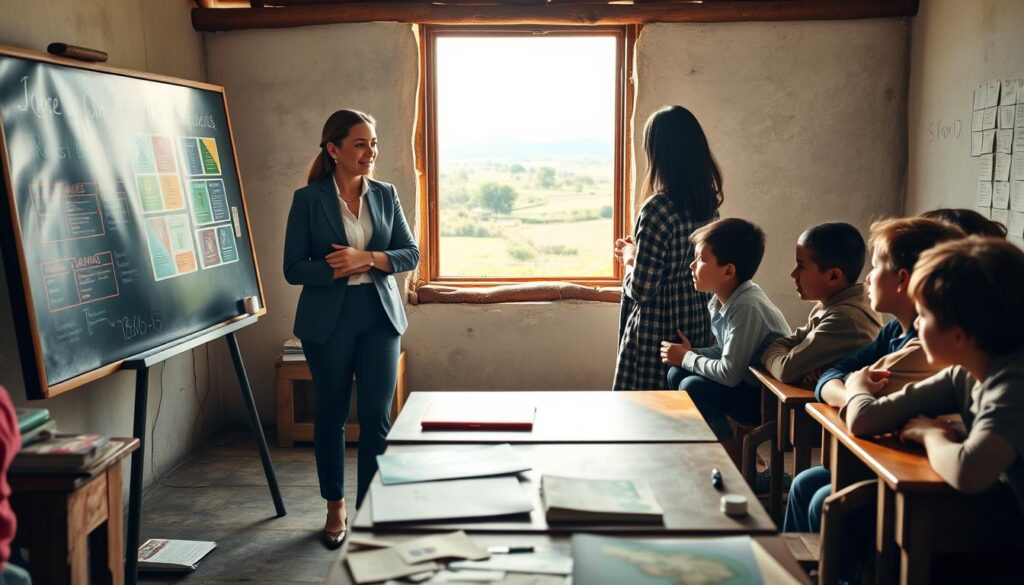
Some efforts are underway. Teach for America sends new teachers to tough spots. The National Rural Education Association fights for more funding. But these are just temporary fixes.
We need to rethink how we attract teachers. We need real incentives, not just one-time bonuses. We need support systems that last.
What really draws teachers to rural areas?
| Traditional Approach | What Actually Works | Impact Level |
|---|---|---|
| One-time bonus | Housing assistance | High |
| Standard salary | Cost-of-living adjustment | Medium |
| Generic training | Community integration program | High |
| Isolated placement | Team teaching model | Medium |
Housing support is key. Imagine giving teachers real homes, not just hoping they find affordable ones. Some areas are starting teacher villages, where educators live and support each other.
Professional growth shouldn’t be a chore. Rural teachers need training that addresses their specific needs. Not another webinar on city classroom management.
Closing the rural education gap takes more than just heroism. We must make rural teaching a viable career choice. Anything less is just rearranging the deck chairs on the educational Titanic.
To solve the rural education gap, we must treat rural teachers as the professionals they are. With the right support, respect, and pay. Anything less is educational malpractice masquerading as policy.
Public-Private Partnerships
When governments and corporations team up, it can be either a success or a mess. But when it works, it’s amazing. Public-private partnerships are key to solving rural student access issues that governments alone can’t tackle.
Imagine the Avengers of education reform. Governments provide the infrastructure, corporations offer the tech, and NGOs add the local touch. Pratham’s digital labs and ThinkSharp’s computer programs are more than just good deeds. They’re strategic partnerships that make a real difference in education equity.
The real magic happens when we change our approach. It’s not just about throwing money at problems. I’ve seen corporate funds build schools that fail because they didn’t listen to the community. That’s like teaching someone to fish but not showing them where the fish are.
Great partnerships know that local involvement is essential. Midday meal schemes and parent-teacher associations are common sense. They work because they meet real needs on the ground.
The Harvard Graduate School of Education shows how these pathways create opportunities for every student. It proves that innovative solutions come from unlikely alliances. It’s not about who gets the credit, but what we do for kids who deserve better.
When public and private sectors listen to each other and the communities they serve, they create something powerful. They build lasting solutions that bridge the rural-education gap in ways that top-down approaches can’t. That’s a partnership worth investing in.
Policy Recommendations
We’ve talked about the rural education gap so much, we could be doctors by now. The real fix isn’t more studies. It’s about making policy changes that actually help.
We need funding that reaches rural classrooms, not gets stuck in red tape. It’s time for action, not just words.
First, we should offer teacher incentives to work in rural areas. This would make rural teaching a desirable job, not a punishment. Second, we need universal broadband access. In 2024, the internet is as vital as air for learning.
The data from Pitt’s rural student research shows how important internet is for student success.
We also need to focus on gender equity. Educating girls in rural areas is not just nice; it’s necessary. Smart policies here don’t just fix the rural education gap. They also help build strong local economies.
The irony is, we’ve known these solutions for years. The problem isn’t a lack of knowledge. It’s a lack of will. Every day we wait to act, more students fall behind in the rural education gap. This isn’t just poor planning; it’s a moral failure.
James develops culturally responsive teaching frameworks and equity audit tools used by
over 150 school districts. A former high school teacher, he brings classroom experience to…