

Accreditation has long functioned as one of the most powerful—but often invisible—mechanisms governing higher education in the United States. Today, that system is facing unprecedented federal scrutiny as policymakers challenge the role of Diversity, Equity, and Inclusion (DEI) standards in evaluating institutional quality. In March 2026, federal officials signaled that accrediting bodies could face consequences…
Accreditation has long functioned as one of the most powerful—but often invisible—mechanisms governing higher education in the United States. Today, that system is facing unprecedented federal scrutiny as policymakers challenge the role of Diversity, Equity, and Inclusion (DEI) standards in evaluating institutional quality.
In March 2026, federal officials signaled that accrediting bodies could face consequences if they continue to incorporate DEI-related criteria into their evaluation frameworks. These developments come amid broader political efforts to redefine how universities demonstrate compliance, accountability, and educational value.
The stakes are significant. Accreditation determines access to billions of dollars in federal student aid, making it a central lever in shaping institutional behavior.
How Accreditation Shapes Institutional Legitimacy
Accrediting agencies serve as gatekeepers of institutional legitimacy. Without accreditation, universities lose eligibility for federal funding programs, including Pell Grants and federal student loans—resources that are essential for student access.
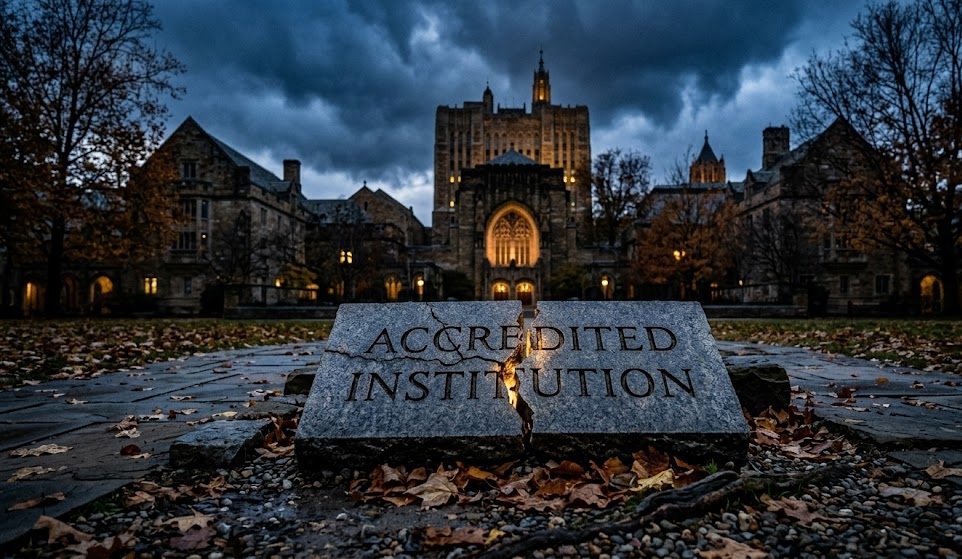
Traditionally, accreditation has evaluated factors such as:
- Academic quality and curriculum rigor
- Financial stability and governance
- Student outcomes and retention
- Institutional mission and integrity
In recent years, many accrediting bodies have expanded these criteria to include DEI-related measures, such as inclusive campus climate, equitable student outcomes, and diversity in leadership.
This expansion reflects a growing recognition that educational quality cannot be separated from equity and access.
Federal Pushback Against DEI Standards
The current federal pressure represents a shift away from that perspective. Policymakers argue that DEI requirements may impose ideological frameworks on institutions and exceed the intended scope of accreditation.
In response, federal officials have warned accrediting agencies that continued emphasis on DEI standards could jeopardize their recognition status—a move that would have cascading effects across the higher education system.
This tension highlights a fundamental policy question: should accreditation focus narrowly on measurable academic outcomes, or should it incorporate broader social and equity considerations?
Recent reporting on federal challenges to accreditation and DEI standards illustrates how this debate is unfolding at both the regulatory and institutional levels.
The Risk Landscape For Universities
For universities, the evolving relationship between accreditation and DEI standards introduces new layers of uncertainty. Institutions must now navigate potentially conflicting expectations from accrediting bodies and federal regulators.

The table below outlines how institutional risk is shifting:
| Dimension | Traditional Accreditation Model | Emerging Policy Environment |
|---|---|---|
| Evaluation Criteria | Academic and operational metrics | Potential exclusion of DEI standards |
| Compliance Strategy | Alignment with accreditor expectations | Balancing federal and accreditor demands |
| Financial Risk | Loss of accreditation (rare) | Increased scrutiny tied to DEI practices |
| Institutional Identity | Mission-driven differentiation | Pressure toward policy alignment |
| Public Perception | Academic reputation | Political positioning and scrutiny |
This evolving risk landscape forces institutions to reconsider how they define success and legitimacy.
Governance And The Politics Of Compliance
The pressure on accreditation is also reshaping governance within universities. Institutional leaders must make strategic decisions about how to align with—or resist—changing policy expectations.
These decisions are rarely straightforward. Removing or reducing DEI initiatives to comply with federal pressure may mitigate certain risks while creating others, including reputational damage, student dissatisfaction, and potential civil rights challenges.
Conversely, maintaining strong DEI commitments may align with institutional values but expose universities to regulatory uncertainty.
This dynamic underscores the importance of governance structures that can integrate legal analysis, ethical considerations, and stakeholder input. Universities must move beyond reactive decision-making and develop coherent strategies that anticipate policy shifts.
Implications For Campus Climate And Student Experience
Changes in accreditation standards have direct implications for campus climate. When DEI metrics are deprioritized or removed, institutions may have fewer incentives to invest in programs that support marginalized students and promote inclusive environments.
This does not necessarily mean that universities will abandon these efforts. However, it may lead to:
- Reduced formal accountability for equity outcomes
- Variability in institutional commitment to inclusion
- Shifts in resource allocation away from DEI initiatives
- Increased reliance on informal or decentralized approaches
These changes intersect with broader trends in higher education, including the restructuring of diversity programs and debates over curriculum content. As seen in discussions around university governance and program cuts, institutional priorities are increasingly shaped by external pressures rather than internal consensus.
Accreditation As A Policy Lever For Systemic Change
The current debate highlights the role of accreditation as a policy lever capable of driving systemic change. By influencing the criteria used to evaluate institutions, policymakers can indirectly shape university behavior at scale.
This approach offers both opportunities and risks. On one hand, it allows for coordinated reform across the higher education system. On the other, it raises concerns about overreach and the politicization of academic standards.
The use of accreditation as a policy tool also blurs the line between quality assurance and ideological regulation—a distinction that will likely remain contested in the years ahead.
Rethinking Legitimacy In A Changing Policy Environment
As federal pressure on accreditation intensifies, universities must reconsider what it means to be a legitimate institution in the eyes of regulators, accreditors, and the public.
Legitimacy is no longer defined solely by academic excellence. It is shaped by compliance, transparency, equity, and the ability to navigate complex policy landscapes.
Institutions that can balance these factors effectively will be better positioned to maintain credibility and stability. Those that cannot may find themselves caught between competing expectations with significant consequences.
The Future Of Accreditation And Institutional Identity
The evolving relationship between accreditation and DEI standards represents a critical inflection point for higher education. It forces institutions to confront difficult questions about their mission, values, and role in society.
Will universities prioritize alignment with federal policy, or will they continue to advocate for broader definitions of educational quality that include equity and inclusion?
The answer will shape not only accreditation practices but the future of higher education itself.
James develops culturally responsive teaching frameworks and equity audit tools used by
over 150 school districts. A former high school teacher, he brings classroom experience to…