

When was the last time we really asked young people about their education? I mean, not just those surveys that get lost in red tape. I’m talking about truly listening to those who go to school every day.The Street Data framework by Shane Safir and Jamila Dugan is a game-changer. It’s like asking restaurant customers…
When was the last time we really asked young people about their education? I mean, not just those surveys that get lost in red tape. I’m talking about truly listening to those who go to school every day.
The Street Data framework by Shane Safir and Jamila Dugan is a game-changer. It’s like asking restaurant customers what they want to eat instead of just serving them. This method focuses on real-life experiences, not just numbers.
When students help create the learning environment, amazing things happen. Classrooms become places where everyone works together. Feeling like you belong becomes more than just a phrase.
This isn’t just about feeling good. It’s about making real changes. We’re building a more democratic society and tackling fairness head-on. The change begins when we truly listen.
Models for Engagement
Remember those student council elections where the charismatic kid won but nothing actually changed? Meet the antidote. The Abbotsford School District’s Student Voice Community of Practice shows what happens when we treat youth leadership education as real governance, not just a popularity contest.
This isn’t student government – it’s student governance. It’s about students driving policy changes, not just sharing opinions. The difference is huge, like comparing a suggestion box to a boardroom seat.
The model is based on a framework that would make Maslow proud. It has four domains: identity, belonging, mastery, and efficacy. It’s like an operating system for real engagement, not just participation.
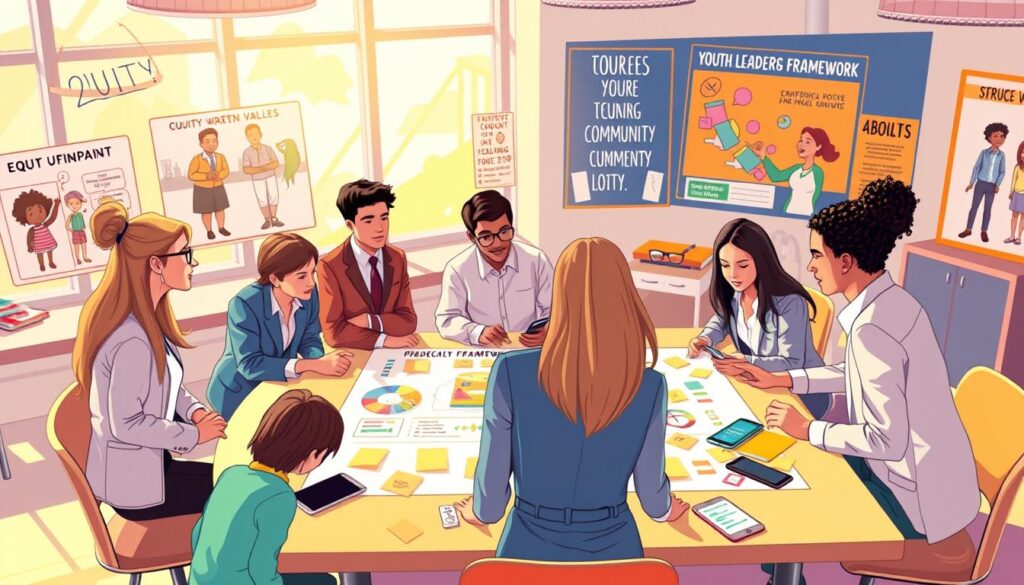
Identity helps students understand their unique perspectives. Belonging creates a safe space for honest input. Mastery develops the skills for effective advocacy. Efficacy builds confidence to implement changes.
The retreats are not just field trips. They are strategic incubators where students learn to articulate their educational experiences. They learn to speak the language of policy, not just complain.
Then comes the magic trick: the Equity Transformation Cycle. Students gather “street data” – real stories from hallways and classrooms. They uncover hidden narratives that tests miss.
This approach aligns with research on early intervention programs. Students don’t just identify problems. They develop concrete recommendations backed by evidence.
The final step? Presenting to actual decision-makers. Not as children, but as partners with well-researched solutions. It’s the difference between asking about wall colors and redesigning the building.
Studies like those found in PMC research articles show this level of engagement develops skills beyond school. Students learn negotiation, research, and implementation – the tools of leadership.
| Traditional Model | Abbotsford Model | Impact Difference |
|---|---|---|
| Popularity-based elections | Skill-based selection | Substance over status |
| Symbolic positions | Actual decision-making power | Real influence |
| Occasional meetings | Structured communities of practice | Continuous engagement |
| Suggestions only | Policy implementation | Tangible outcomes |
| Theoretical learning | Applied leadership development | Practical skill building |
The table shows a fundamental shift. We’re not just checking boxes. We’re building the next generation of leaders through real youth leadership education that prepares them for challenges.
This model proves that when we trust students with real responsibility, they offer real solutions. The question isn’t whether students can handle this level of engagement. It’s whether institutions can give it to them.
Youth-Led Research
Who better to study classrooms than the students themselves? It’s not just watching from the sidelines. It’s about giving students real power in their learning spaces.
Imagine teens doing research to make classrooms better. They might look into how schedules affect their mental health. These are real projects happening in schools today.

Students are getting creative with their research. They look into how grades can actually hurt motivation. They track bullying patterns with the eye of a scientist. It’s like reality TV, but with a purpose.
They also use “I Am From” poems to gather data. Social justice projects mix numbers with stories. This way, students learn to question and respect different cultures.
When students share their findings, it’s powerful. They’re not just collecting data; they’re creating frameworks that impress even the best professors. Every classroom turns into a place where students are the true experts.
This method tackles student voice equity head-on. Students are not just being studied; they’re leading the research. They’re the ones shaping what we learn about education.
The outcome? Insights that adults might overlook. By studying their own classrooms, students reveal truths that tests can’t. They’re not just learning research skills; they’re changing what we consider valuable in education.
Amplifying Stories to Policymakers
Student voice turns into real policy when young people meet with superintendents and school boards. Those speeches about better lunches? Now, students are changing whole support systems.
In Abbotsford, youth leadership education went beyond school. Students spoke to provincial leaders, shaping Indigenous education policies. This is more than policy change; it’s fixing past mistakes led by those affected.
Research from Purdue University highlights the power of student voice. When 500 education leaders listen, we see real change.
Family engagement brings wisdom to youth leadership. Policy becomes visionary and meets community needs. Without student experience, policy is just paper.
This is when student voice becomes a force for change. The revolution is already happening, at the school board.
James develops culturally responsive teaching frameworks and equity audit tools used by
over 150 school districts. A former high school teacher, he brings classroom experience to…