

Imagine starting a marathon when everyone else is already at mile 10. That’s what low-income students face in school.Studies show a harsh truth: poor kids start high school five years behind in reading. They’re already three years behind in basic skills before they even learn to tie their shoes.This isn’t about being smart—it’s about having…
Imagine starting a marathon when everyone else is already at mile 10. That’s what low-income students face in school.
Studies show a harsh truth: poor kids start high school five years behind in reading. They’re already three years behind in basic skills before they even learn to tie their shoes.
This isn’t about being smart—it’s about having chances. The data shows how money affects the brain. It changes how we remember, speak, and feel.
The achievement gap is real and big. It’s not just a number—it’s a sign of a bigger problem. These kids are playing a game they can’t win because the rules are unfair.
Disparities in School Funding
Ever wonder why some schools have cool tech while others have old books? America’s schools are like a lottery, where where you live affects what you learn. The funding gaps are huge and clear.
I’ve seen schools with old science tools and others with new AI tech. It’s not just about cool stuff. It’s about fairness in education. The playing field is far from even.
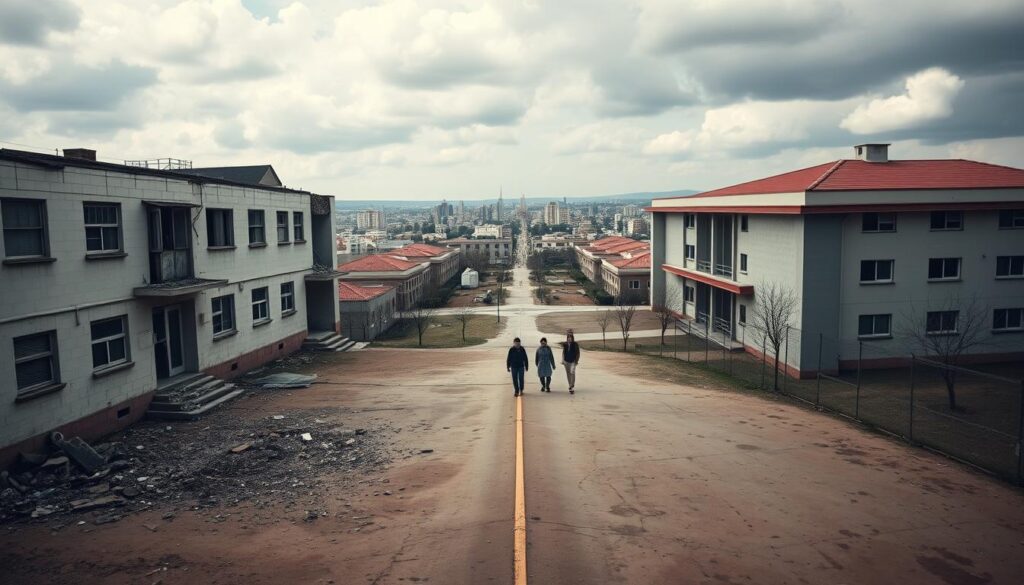
Then there’s Title I funding, our try to make education fairer. We’ve been giving out federal money for decades. But, it’s like trying to save a ship with a tiny bucket.
High-poverty schools face huge challenges. They have old buildings, outdated tech, and few books. It’s tough for students to learn in these conditions.
- Dilapidated facilities that would make Dickens blush
- Technology gaps that leave students digitally stranded
- Library collections thinner than a celebrity’s memoir
- Extracurricular programs that vanish like mirages
Teachers want to work in better schools. They look for places with good pay and modern classrooms. It’s hard to teach without basic supplies.
This makes schools rich and poor, like two different worlds. Rich schools get cool tech, while poor ones get promises. It’s unfair.
Schools in poor areas have tight budgets. They can barely afford basic things. It’s not just about nice things; it’s about essentials.
Until we fix these funding gaps, we’re teaching two Americas. One gets ready for the future, the other doesn’t. It’s unfair.
This isn’t just about money. It’s about respect. Every student deserves a good classroom. We need to change how we value education in poor areas.
Housing & Nutrition
Imagine trying to solve algebra while your stomach is doing a drum solo. This isn’t just hunger—it’s a brain shutdown. The poverty and achievement gap isn’t just about grades; it’s about empty bellies and unstable homes.
Malnutrition isn’t just about being hungry. It means:
- Iron deficiency reduces oxygen to growing brains
- Blood sugar crashes make classrooms sleepy
- Lack of nutrients slows down brain development
I’ve seen smart kids struggle with reading because they haven’t eaten. Their brains aren’t dumb—they just need food.
Now, let’s talk about homes. Homes where you don’t know where you’ll sleep tonight. Housing instability is like malware in a child’s mind. It makes them worried and:
“The brain can’t learn when it’s scared. You can’t think clearly when you’re worried about safety.”
This isn’t just theory. Studies show students without stable homes:
| Housing Status | Attendance Rate | Math Proficiency | Behavioral Incidents |
|---|---|---|---|
| Stable Housing | 96% | 78% | 0.7 per month |
| 1-2 Moves/Year | 89% | 62% | 2.3 per month |
| 3+ Moves/Year | 76% | 41% | 4.8 per month |
Every move hurts their school work. These kids are fighting hard to keep up. They’re doing mental math before class even starts.
Food insecurity makes things worse. Schools measure success with tests, but they should look at the cafeteria. The link between food and learning is clear.
We expect kids to learn math when they’re hungry. It’s like expecting a phone to work without power. Our system is failing our most vulnerable students.
The poverty and achievement gap is a big human problem. Until we fix housing and food, we’re just trying to fix the symptoms. We need to change the system.
Breaking the Cycle: Community Solutions
Systemic problems like school funding gaps can seem overwhelming. But communities across America are finding ways to overcome these challenges. They are turning educational deserts into oases of opportunity through strategy.
Early childhood education is key to fighting future academic struggles. It’s not just daycare; it’s building neural pathways during critical development windows. Kids who attend quality preschool programs enter kindergarten 14 months ahead of their peers in literacy and math skills.
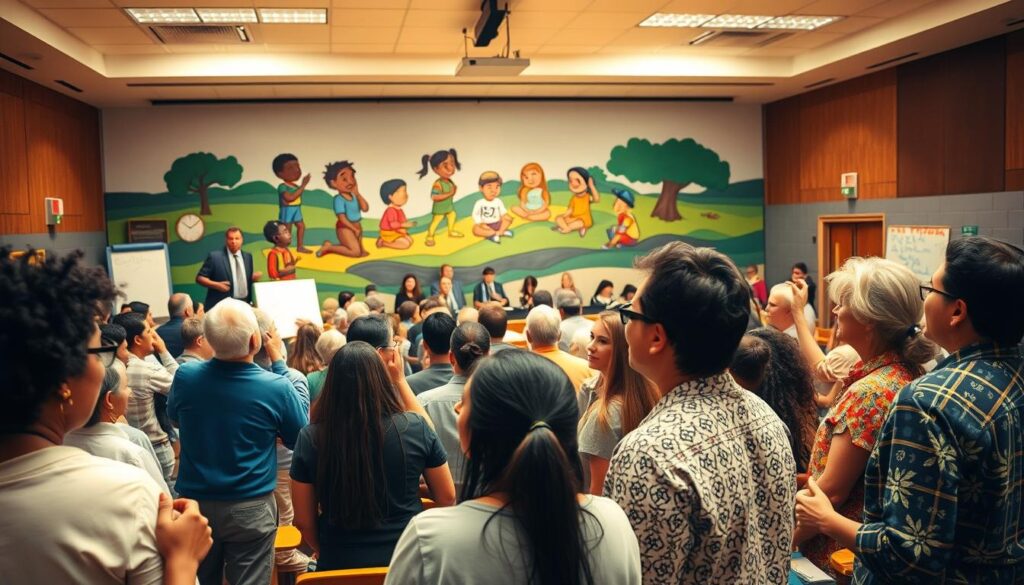
Real change happens when we focus on building ecosystems, not just treating symptoms. Imagine schools where:
- Teachers practice trauma-informed education
- Mentorship programs look like something from a feel-good movie
- Nutrition programs turn cafeterias into brain-fuel stations
- Community resources wrap around kids like educational safety nets
These aren’t just ideas; they’re real models in action. A recent study shows that communities using multi-pronged approaches see big improvements in student outcomes. This is true even when there are socioeconomic barriers.
Let’s look at the winning formula:
| Solution Component | Implementation | Impact Measurement |
|---|---|---|
| Early Childhood Programs | Community-funded preschool slots | Kindergarten readiness scores |
| Nutrition Support | School-based food pantries | Attendance & concentration metrics |
| Targeted Tutoring | Local college student partnerships | Math & reading proficiency gains |
| Parent Education | Evening workshops & resources | Home learning activity reports |
The most successful community solutions understand that education happens everywhere. Not just in classrooms. When libraries, businesses, and local organizations work together, they create strong support systems. These systems help protect against economic disadvantages.
Combining financial support with empathetic teaching creates environments where poverty doesn’t win. It’s about giving everyone access to the resources they need. This way, kids facing challenges get the help they deserve, not just what everyone else gets.
These strategies aren’t about throwing money at problems. They’re about using the right solutions to fix systemic failures. When communities take charge, they build educational ecosystems where every child has a chance to succeed. This is true, no matter where they live or what their family’s income is.
Conclusion
The poverty and achievement gap is more than just a classroom issue. It costs our economy a whopping $700 billion each year. This loss affects innovation, medical progress, and silenced voices that could have made a difference.
We’ve known how to fix this for decades. Early childhood programs, fair school funding gaps, and nutrition support are key. It’s a matter of choice, not complexity. Yet, we document the problem instead of solving it.
Socioeconomic inequality has a big impact on us all. But it’s not set in stone. We can change it with community efforts and smart policies. It’s a man-made problem, and we can fix it.
The question isn’t if we can afford to invest. It’s whether we can handle the cost of ignoring the issue. Every child left behind is a failure we all bear. It’s time for action, not more studies.
James develops culturally responsive teaching frameworks and equity audit tools used by
over 150 school districts. A former high school teacher, he brings classroom experience to…