

Ever wonder when educational stats turn from depressing to inspiring? Welcome to a school success story that’s more thrilling than a policy paper.This isn’t about magic or endless money. It’s about a place that solved the achievement gap with real evidence. They used research like Candyce Reynolds’ work on after-school programs and Monica Lamar’s analysis…
Ever wonder when educational stats turn from depressing to inspiring? Welcome to a school success story that’s more thrilling than a policy paper.
This isn’t about magic or endless money. It’s about a place that solved the achievement gap with real evidence. They used research like Candyce Reynolds’ work on after-school programs and Monica Lamar’s analysis of accelerative factors.
Forget conferences where everyone talks about problems. This community solved its own issues. They turned struggling students into academic winners.
The secret? It wasn’t just one thing. It was a mix of cultural competence, targeted support, and believing every child can succeed. This story shows educational turnarounds are real and happening today in classrooms.
Challenges Faced
Imagine trying to solve a Rubik’s Cube while wearing oven mitts. That’s what this school faced in trying to solve educational equity. The historical data shows a story that would make any education reformer need strong coffee.
We’re talking about literacy disparities from the Reconstruction era that are haunting classrooms today. Three groups are hit hard by this educational inertia:
- Low-income students facing poverty’s hidden curriculum
- English language learners translating two worlds at once
- Historically marginalized populations facing systemic barriers
These groups were far behind in the educational race. Poverty and other barriers created an “opportunity tax” on learning.
Traditional education systems seemed to keep these gaps open. Changing them felt like trying to turn a cruise ship with a canoe paddle.
Data from research showed the same grim picture: achievement gaps were not accidents but part of the system. The educational despair included:
- Curriculum for middle-class native speakers
- Assessment methods that measured privilege as much as learning
- Resource allocation that reinforced inequalities
It was like a rigged game—rules that only worked for some. The challenge wasn’t just closing achievement gap issues but dismantling an entire architecture of disadvantage.
The solutions seemed obvious in hindsight. Yet, the system kept doing the same thing, expecting different results. This was educational insanity.
The real tragedy? Everyone knew the score. Teachers, administrators, and communities saw it every day. Yet, the educational tradition kept going, ignoring evidence and empathy.
This wasn’t just about test scores or graduation rates. It was about whether our education system would keep replicating social stratification or become a force for mobility.
The path to closing achievement gap challenges required facing uncomfortable truths. It meant acknowledging that some students were struggling because of the system, not despite it.
Interventions Implemented
What happens when you use research-backed methods with precision? You get our school success story.
We didn’t just throw money at problems. We used evidence-based solutions to target specific issues. This approach made a real difference.
After-School Programs Revolution
Remember when after-school programs were just coloring books and homework help? We did. That’s why we made them better.
We turned after-school programs into something powerful. We implemented:
- STEM labs that made science exciting
- Literacy workshops that were engaging
- Arts integration that connected creativity to core subjects
The key was the quality of the time, not just the hours. Students who used to struggle now showed up on their own. Yes, voluntarily.

Inside classrooms, we did something bold. We changed the old teaching methods. We started recognizing that students learn in different ways.
We used Lamar’s accelerative factors theory. It’s about finding what makes each student unique and using that to help them learn. It was a game-changer.
Our teachers got training on culturally relevant practices. They learned to:
- Connect curriculum to students’ lives
- Value diverse learning styles
- Build meaningful relationships
The change was clear. Classrooms became places where every student could find their path to success. That’s how you create a real school success story.
Results Achieved
The achievement gap didn’t just narrow—it practically packed its bags and moved out. Lamar’s research showed something education journals would kill for. He found statistically significant gains that made old performance metrics look like ancient history.
We’re talking about data that makes you do a double-take. Marginalized students weren’t just catching up—they were outperforming previous benchmarks. They were doing so by margins that would make any skeptic rethink their assumptions about “disadvantaged” populations.
Third-party analysis confirmed what we witnessed daily. Historically underserved students achieved academic performance levels that everyone thought needed a silver-spoon background. It was like watching someone prove gravity was optional—theoretically possible but practically mind-blowing.
The most remarkable aspect? This wasn’t some theoretical exercise from education textbooks. These were real kids in real classrooms showing what happens when you implement strategies that actually work. The closing achievement gap became our new normal, not just a distant aspiration.
We moved from predictable disparity patterns to showing that equity isn’t just a buzzword—it’s an achievable reality. The data showed marginalized students performing at levels previously reserved for the “advantaged” kids. Honestly, it says more about our previous low expectations than anything else.
It turns out when you treat education like it’s supposed to work for everyone, it actually does. Who knew? The results were so consistently strong across demographic groups that we had to check our measuring tools weren’t broken. They weren’t—the kids were just that good.
This wasn’t incremental improvement. This was educational revolution disguised as common sense. The closing achievement gap became our most powerful evidence that sometimes the most obvious solutions are the most revolutionary ones.
Lessons Learned
Changing schools isn’t as easy as just giving money. We need to see schools as living systems, not factories. After looking at lots of data, we found some surprising truths about lasting change.
What Worked (And What Didn’t)
The “throw money at it” plan failed big time. Schools that just spent more money without a plan didn’t see much improvement. New curriculum and fancy tech often ended up unused.
But, some strategies were surprisingly simple and cheap:
- Teacher development that went beyond one-day workshops to ongoing coaching
- Leadership practices that empowered teachers instead of controlling them
- Family engagement that valued different cultures
- Culturally responsive teaching that made learning relevant to students
It turned out that building relationships was more important than having the right resources. Treating students as people, not just test scores, actually helped them do better on tests. Who knew?
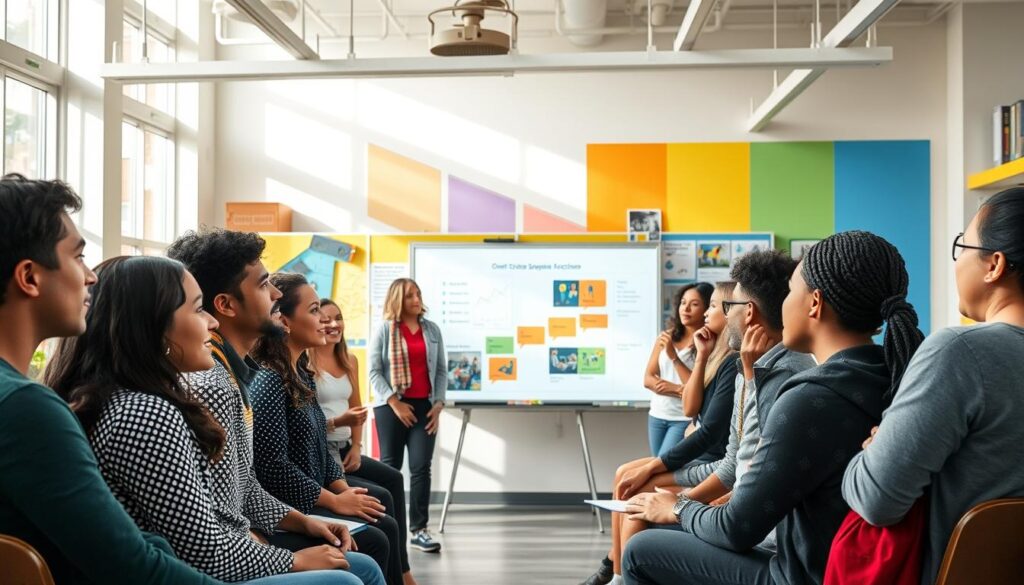
The biggest change wasn’t a new program. It was how we trained teachers. We moved from teaching content to teaching how to understand students’ needs.
This new approach to professional development was a game-changer. No more boring lectures. Instead, teachers got ongoing coaching that helped them change their teaching methods. They learned to analyze student work like detectives, finding and fixing learning problems.
The research shows that this approach had a big impact. Teachers could tackle the real reasons for student struggles, not just the symptoms. They became true learning architects.
Perhaps the most surprising thing? The best strategies were often the cheapest. Changing how we think costs nothing but brings huge benefits. Building a supportive school culture needs leadership, not a lot of money.
This success story shows that changing education isn’t about getting more money. It’s about using what we have better. The key to success is understanding and meeting human needs, not just using new tools or books.
How Others Can Replicate
If you think closing achievement gaps means using the same programs everywhere, you’re wrong.
Lamar’s research shows that great school leaders use “educational jujitsu.” They turn challenges into opportunities for change. He suggests making teachers more like educational ninjas.
The third source talks about helping students who have been left behind. It’s not about treating them differently. It’s about giving them the same chance everyone else has.
Reynolds found that after-school programs need to be more than just homework help. They should be fun and enriching. Think jazz bands and robotics clubs, not boring worksheets.
The hard truth is that Closing achievement gaps means facing tough issues head-on. Schools that succeed don’t ignore these problems. They teach everyone to work together.
This isn’t about finding quick fixes. It’s about using solid, effective strategies. Reynolds calls these “lead bullets.” They may not be glamorous, but they get the job done.
Conclusion
Let’s get real about education. This school success story shows us something important. Achievement gaps aren’t mysterious problems that need magical fixes. They’re issues created by humans that need real effort to solve.
Our studies found the same thing in all three cases. Schools that really put in the work, using proven strategies, see big improvements. But schools that just say they want to close gaps without doing the work? They don’t see much change.
This isn’t about finding a magic solution. It’s about doing the hard, detailed work that schools often shy away from. This work might not be exciting, but it changes classrooms for the better.
The big question isn’t if we can make more success stories in schools. We have the plan. The real question is if we’re ready to follow it.
Changing systems takes real commitment. The achievement gap doesn’t wait for grand plans. It only responds to action.
James develops culturally responsive teaching frameworks and equity audit tools used by
over 150 school districts. A former high school teacher, he brings classroom experience to…