

Let’s be honest – most top-down initiatives fail because they forget who actually lives the problems. I’ve seen enough well-funded programs crash and burn while ignoring the people they’re supposed to help.True change happens when healthcare providers, faith groups, and neighborhood residents actually sit at the same table. This isn’t just feel-good cooperation – it’s…
Let’s be honest – most top-down initiatives fail because they forget who actually lives the problems. I’ve seen enough well-funded programs crash and burn while ignoring the people they’re supposed to help.
True change happens when healthcare providers, faith groups, and neighborhood residents actually sit at the same table. This isn’t just feel-good cooperation – it’s strategic power building that addresses health disparities where they actually exist.
These community partnership arrangements create something magical: shared learning platforms built on trust. They bridge the gap between academic research and street-level reality, transforming how we approach persistent challenges.
The result? Data-driven outcomes that actually stick because they’re designed with – not for – the people who need them most. That’s the real secret sauce for meaningful progress.
Examples from Districts
Remember when education reform focused on more tests and strict rules? It didn’t work well. The real change comes when we treat communities as partners, not just subjects.
St. Louis’s CARES project is a great example. They’re not just studying economic segregation; they’re fighting it with Community Benefits Agreements. This approach makes residents part of the solution, not just the study.

Healthcare has also made a big shift. They’re working with faith groups to use church basements for health care. It’s like Leslie Knope from Parks and Rec listening to what people need. These partnerships are tackling health issues that affect learning.
University-community partnerships are showing great results. When academics work directly with neighborhoods, they find that understanding local needs is key. These partnerships create real-world solutions that are easy to grasp.
Districts making progress on closing achievement gap aren’t waiting for federal help. They’re building local partnerships that meet specific needs. It’s education reform that gets that one size doesn’t fit all.
Effective Collaboration Models
Ever seen a heist movie where everyone knows their role? The driver drives, the hacker hacks, and the explosives expert does their thing. That’s what community partnership models do. They assign clear roles to get things done, not just talk about them.
The RAPID® framework makes collaboration precise. It tells you who:
- Recommends actions
- Agrees to decisions
- Performs the work
- Provides input
- Actually decides outcomes
This isn’t like academic research where communities just agree. RAPID ensures everyone has a say and power is shared. This stops the usual power imbalance.
The CBPR model goes further. It uses four scientific domains to make partnership work measurable. It’s like the difference between jazz and a symphony – both create music, but one is planned.
These models turn community knowledge into real expertise. They create systems where local insights lead research and projects. This makes sure everyone’s voice is heard.
A study in the National Center for Biotechnology Information shows these frameworks improve community work. They make sure everyone is working towards real change, not just pretending.
The best part? These models work for many things, like public health and urban planning. They give everyone the right tools to do their job well, not just make do with what they have.
Key Takeaways
After diving into many research papers, I found the secret to successful community partnerships. It’s not about using fancy words or pretending to help. It’s about real action to close achievement gaps.
First, bidirectionality is more than just a term. It means working together, not just taking from communities. It’s about true collaboration, not just taking.
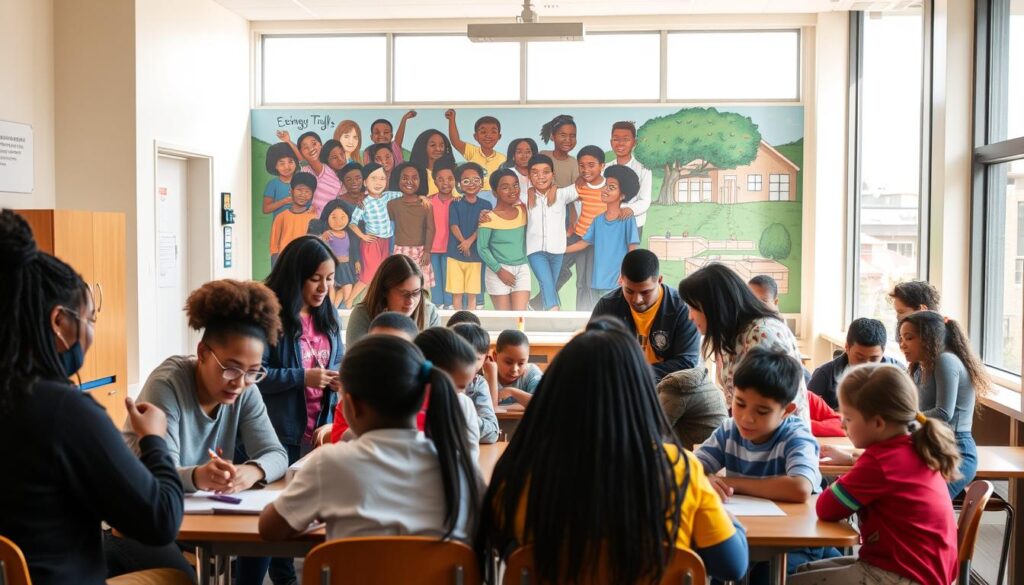
The RAPID® framework might seem like another corporate term. But it’s actually a tool for fairness. It stops one group from controlling everything by making sure everyone has a say. It’s like democracy in action, not just another meeting.
Data is more than just numbers. It helps us find and fix problems. It’s about using data to help people, not just to look good.
“Communities aren’t problems to be solved but partners to be leveraged.”
This way of thinking makes a big difference. It turns partnerships into real help, not just empty promises. It’s like being a guest who helps with the dishes, not just a visitor.
Good partnerships share power, not just information. They let community voices decide, not just advise. This is how we really make progress.
The best partnerships have three key things:
- Genuine power-sharing in decision-making
- Data systems that track what communities care about
- Policy advocacy that unites efforts
When these are in place, partnerships become real change-makers. They stop being just talk and start doing real work.
The main lesson is that communities already have the answers. Our job is to help them share and grow their solutions.
Conclusion
We’ve treated community engagement like a checkbox on a form. But real change doesn’t work that way. Community partnership is more than nice to have. It’s essential for building healthcare that truly understands people’s lives, not just their diseases.
Investing in these relationships is not charity. It’s about gathering strategic intelligence from the front lines of inequality. When done right, these collaborations can change policies. They show us the real truth, not just what we wish to believe.
The most advanced research models fail when they ignore the community. This isn’t about rocket science. It’s about respecting the community’s knowledge. As shown in recent studies, these community partnership approaches are tackling disparities head-on, not just studying them.
We’re shifting from treating symptoms to addressing the root causes. The community partnership model is healthcare’s smartest evolution yet. It recognizes that those living the experience have the solutions. This is how we create systems that heal, not just treat.
James develops culturally responsive teaching frameworks and equity audit tools used by
over 150 school districts. A former high school teacher, he brings classroom experience to…