

We’ve been using old methods in education, while students live in a world of TikTok. Traditional ways and guesses aren’t enough anymore.Chronic absenteeism is rising fast, like viral dance challenges. Student engagement is dropping, even lower than movie attendance after the pandemic. Achievement gaps are as stubborn as that one relative who won’t leave.But here’s…
We’ve been using old methods in education, while students live in a world of TikTok. Traditional ways and guesses aren’t enough anymore.
Chronic absenteeism is rising fast, like viral dance challenges. Student engagement is dropping, even lower than movie attendance after the pandemic. Achievement gaps are as stubborn as that one relative who won’t leave.
But here’s the twist: 90% of higher education leaders think making decisions with data is key. Why? Because numbers turn vague problems into clear actions.
It’s like the difference between throwing darts blindfolded and using a precise laser. Data doesn’t just show what’s happening. It tells us why and what we can do about it.
This isn’t about replacing gut feelings with numbers. It’s about getting the answers we’ve been searching for after all these years.
Key Metrics for Equity
Thinking educational equity is just about equal funding is like playing checkers. The real game is 3D chess. The key metrics are like a diverse investment portfolio, not your 401k.
Assessment data goes beyond just test scores. We look at course completion rates, grade patterns, and how students progress. Who finishes Algebra II? Who gets A’s or C’s in honors classes? This shows real progress.
Behavioral data tells a story that mission statements can’t. SEL metrics, discipline referrals, and suspensions show systemic issues. Seeing who gets disciplined and why uncovers biases.
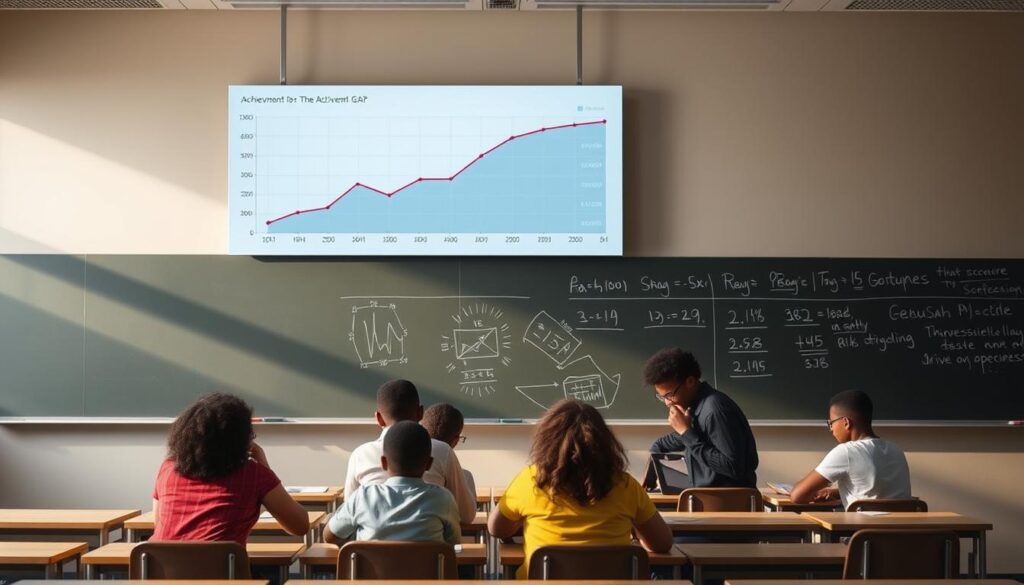
Attendance records show how engaged students are. Chronic absenteeism signals disengagement. It predicts academic struggles before they show up on report cards.
Demographic data helps us see more than averages. It shows if advanced classes reflect our school’s diversity. It also checks if special education services are fair.
Houston ISD surveyed 14,000 students. Student feedback is more than just opinions. It’s early warning data for disengagement, stress, or frustration.
This approach is the true art of narrowing the gap with data. We watch for gaps in special education, discipline, and advanced classes. It’s about finding solutions, not just problems.
The goal is to use data as a strategic asset. When we measure what matters, we can change it.
Using Data Dashboards
Remember those sci-fi control rooms with walls of flashing data? Welcome to education’s new reality – less Hollywood drama, more actual results. We’ve covered why data matters and key metrics before. Now, let’s dive into how modern dashboards turn raw numbers into insights we can act on.
At Spanish Fork Junior High, they’re using Panorama Student Success to spot at-risk students early. It’s not about replacing teacher intuition. It’s about using data-driven education to help, not hinder, teaching.
Real-time student check-ins are now common. Waiting for quarterly reports is too late. These platforms automatically flag students in three key areas:
- Academic performance – Spotting trends before test scores crash
- Behavior patterns – Noticing social changes that might indicate bigger issues
- Attendance metrics – Identifying chronic absence before it becomes habitual
The beauty is in the automation. Modern dashboards save hours of manual review. Teachers can focus on teaching instead. As recent educational research shows, this marks a shift from reactive to proactive support.
These aren’t old, clunky spreadsheets. Today’s dashboards are easy to use and offer smart alerts. They don’t just collect data; they make it meaningful for educators to act quickly.
This approach is revolutionary. It combines numbers with human understanding. Dashboards give the numbers, but teachers add the nuance. Together, they create a powerful partnership that truly supports students.
This is the new standard in data-driven education. Systems that work so well, they’re almost invisible. Teachers can then focus on what they do best: connecting with and supporting students.
Examples of Data-Led Success
Ever wonder what happens when data stops being just numbers and becomes real action? Let me show you what real change looks like.
Long Beach Unified made a big change. They started using data in monthly meetings instead of just talking about budget cuts. This led to better growth for low-income and English-learning students. It’s a big win for equity.

Syracuse City School District looked at absenteeism and thought differently. They used data to find patterns, not just add more truancy officers. This approach lowered absenteeism without using more force.
Charlotte-Mecklenburg used predictive analytics like Minority Report. They knew which students needed help before they fell behind. This led to record-high graduation rates, showing the power of data.
My favorite story is Pickerington Local School District. They used data to improve their MTSS approach. When students feel connected, they attend school more. This shows how belonging is key.
These stories are not small wins. They are big changes. We’re not just narrowing the gap with data – we’re building new bridges.
The key is using data as real intelligence, not just guesses. They moved from “what does this mean?” to “what shall we do about it?”
This is the difference between just collecting data and using it to change lives. One gives you pretty charts. The other gives you real change.
Challenges & Solutions
Implementing data-driven education is like trying to solve a Rubik’s Cube while riding a unicycle. The idea looks great, but the real challenge is in the doing.
Schools often face a common problem:
- Act I: Collecting data but not acting – educational voyeurism at its finest
- Act II: Ignoring perception data – missing the human context behind the numbers
- Act III: Misaligning tools and training – buying Ferrari platforms but giving bicycle lessons
Time is a big obstacle. Teachers are too busy teaching, mentoring, and eating lunch to analyze spreadsheets all day.
So, how can we turn this around?
“Start with a laser, not a floodlight. Focus beats frenzy every time.”
Here’s a plan for making data-driven education work:
- Prioritize ruthlessly: Pick one or two important metrics instead of trying to do everything
- Integrate, don’t separate: Talk about data in regular meetings, not in extra ones
- Invest in real PD: Training that sticks is better than tools that get forgotten
The aim is not to analyze data all day. It’s to get useful insights. We beat data overload by making data-driven education practical, not perfect.
The best data strategy is the one people use. Not the one that looks good in a presentation.
By focusing on key metrics and using data in our daily work, we create a culture where numbers help people. That’s how we make data-driven education that really changes things.
Conclusion
So, where does this leave us in the grand education saga? Data isn’t just numbers on a spreadsheet—it’s a compass in a storm of scrutiny. Think of it as the GPS for school improvement, not the destination.
We’re talking about narrowing the gap with data that actually means something. It’s about turning those insights into action, not just collecting stats like Pokémon cards. This approach builds a culture where data is used smartly, together, and ethically.
The result? Schools that don’t just survive but thrive, teachers who feel like superheroes, and students who actually flourish. It’s our best shot at understanding why gaps exist and making sure they don’t come back.
Sure, it takes work. But flying blind while hoping for change? That’s like expecting a TikTok trend to last forever—not gonna happen. The data has spoken; are we ready to listen and start narrowing the gap with data that drives real change?
James develops culturally responsive teaching frameworks and equity audit tools used by
over 150 school districts. A former high school teacher, he brings classroom experience to…