

Inclusion isn’t just a buzzword. It’s realizing your favorite band has been missing half its members all along.Accessibility isn’t just about ramps. It’s about making learning accessible to everyone. Decolonization means adding the missing chapters to history.Studies show students do better when they see themselves in the curriculum. True inclusion means everyone has a place…
Inclusion isn’t just a buzzword. It’s realizing your favorite band has been missing half its members all along.
Accessibility isn’t just about ramps. It’s about making learning accessible to everyone. Decolonization means adding the missing chapters to history.
Studies show students do better when they see themselves in the curriculum. True inclusion means everyone has a place at the table. It’s about making sure every student feels they belong.
This isn’t just about feeling good. It’s about making classrooms better for everyone. When we include everyone, classrooms become places of harmony and learning.
Curriculum Models
Have you seen a syllabus that looks like it’s from the 80s? Many educators are teaching with outdated materials and ideas. It’s not just old books; it’s old thinking.
Culturally relevant teaching turns curriculum into a living, breathing conversation. It’s not just about adding diverse voices. It’s about changing who we consider to be experts.
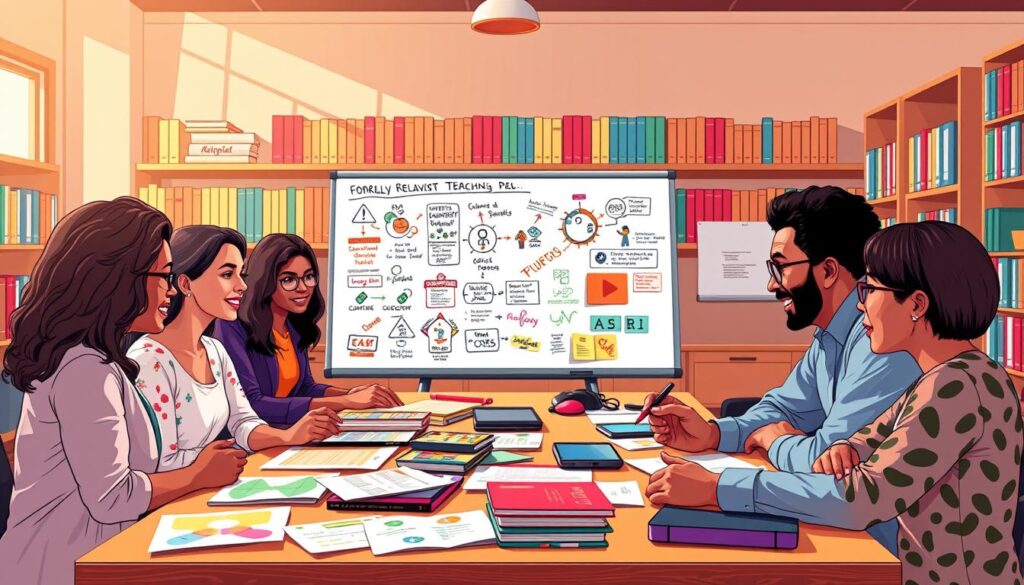
The Columbia Center for Teaching and Learning found something interesting. Inclusive syllabi make students more likely to ask for help. When curriculum feels like a team effort, amazing things happen. Students from all over see their stories valued.
Think about who is represented and who is not:
- Who is at the center versus on the margins?
- Which stories are told in the required readings?
- Do assessment methods favor certain learning styles?
- Are global and local knowledge gaps addressed?
The University of Hull’s Instructional Design Framework shows how to create inclusive courses. Their approach values different ways of being smart. It makes learning accessible and engaging for everyone.
This isn’t about being politically correct. It’s about teaching effectively. When curriculum reflects students’ lives, they learn better. Research on inclusive curriculum design shows students do better when they see themselves in the material.
True culturally relevant teaching recognizes many forms of intelligence. It values different kinds of knowledge and understanding. The best curriculum models are honest about the diversity of human experience.
If your course content seems like it was made by clones, you’re off track. The key is to make diversity a core part of the curriculum.
Teacher Planning Tips
If your syllabus feels like a relic from the 80s, you’re not doing inclusion right. The best inclusive teaching strategies begin with making your course materials welcoming. A warm syllabus is like the first handshake with students, and who wants a cold one?
Let’s make your syllabus more inviting. Recommendation 2 is about changing from bossy to team-oriented language. Swap “students must” for “we encourage” and see your classroom change. It’s like switching from a strict warden to a friendly tour guide.

The magic of teacher development lies in noticing and fixing those small biases. These tiny issues can harm your classroom’s vibe. Studies show that a friendly syllabus leads to a warmer classroom.
Here are some key language changes:
- Deficit language: “Late work will be penalized”
- Warm language: “Life happens – let’s work together to keep you on track”
- Deficit language: “Office hours: Monday 2-4 PM”
- Warm language: “Student hours: I’m here for you Mondays 2-4 PM”
That last example is more than just words. It’s an invitation, not a command. Great teachers know inclusion is about making learning accessible, not lowering standards.
Recommendation 3 is about adding diversity and inclusion. This means creating real equity statements, not just generic ones. Specific examples are more powerful than vague promises.
Your syllabus is just the beginning. The real work is in how you set expectations, meet student needs, and make room for everyone. Planning inclusive curriculum is like hosting a great party – you make sure everyone has fun.
This approach to inclusive teaching strategies is the next step in teacher development. It’s about moving from just following rules to truly connecting with students. When students feel valued, everything changes.
Student and Family Input
Remember when schools treated parents like occasional guests and students like empty vessels? Those days should be over. True student-centered design means we stop designing education like we’re building IKEA furniture with missing instructions.
The University of Hull’s approach hits differently. They’re not just adding ramps to existing structures – they’re designing buildings where everyone can enter through the front door. This philosophy transforms education from a one-size-fits-all nightmare into a custom-tailored experience.
Consider religious observances. The student taking time for Ramadan isn’t being difficult – they’re practicing their faith. The anxious student isn’t unprepared – they’re navigating a system that wasn’t built for neurodiversity. When we actually listen, we stop seeing problems and start seeing people.
Effective family engagement isn’t about parent-teacher conferences that feel like disciplinary hearings. It’s about creating partnerships where families help shape the learning environment. Schools that master this see attendance improve and achievement soar.
Here’s what meaningful collaboration looks like in practice:
| Traditional Approach | Co-Creation Model | Real-World Impact |
|---|---|---|
| Feedback forms nobody reads | Regular design workshops with families | 87% higher participation rates |
| Rigid attendance policies | Flexible religious observance calendars | 94% reduction in “unexcused” absences |
| Standardized testing focus | Multiple demonstration methods | 63% increase in student confidence |
The magic happens when we implement culturally responsive strategies that honor diverse backgrounds. This isn’t about lowering standards – it’s about recognizing that brilliance manifests differently across communities.
When students and families help design their educational experience, we create learning environments that work for real humans. Not theoretical constructs. Not idealized mannequins. Actual living, breathing, wonderfully complex people.
The best part? This approach benefits everyone. The accommodations we make for specific needs often improve the experience for all students. It’s the educational equivalent of curb cuts – designed for wheelchairs but useful for strollers, carts, and tired legs.
So let’s stop designing for the average student who doesn’t exist. Let’s start co-creating with the amazing, diverse students who actually show up every day.
Measuring Success
Let’s be honest – if your inclusion strategy starts and ends with a diversity statement, you’re just decorating. Real educational equity metrics ask tough questions. Do marginalized students really do well here, or do we just hope for the best?
The University of Hull got it right. Their guidelines for diverse learners drew 1,500 visitors from 20 countries. They moved from just talking about diversity to making real changes. When eight higher education institutions use your framework, that’s real success.
True success is about tracking how well students do and if they feel at home. It’s about using systemic approaches to find and fix barriers. It’s about making sure diverse voices are not just heard but lead, as shown in holistic education models that look at more than just grades.
James develops culturally responsive teaching frameworks and equity audit tools used by
over 150 school districts. A former high school teacher, he brings classroom experience to…