

Universities have long positioned themselves as environments where intellectual freedom, diversity, and dialogue coexist. Yet in recent years, campus climate—particularly regarding discrimination and student safety—has become the subject of intense public scrutiny. Recent reports examining antisemitism across U.S. universities highlight both progress and persistent challenges. Investigations, student surveys, and institutional reviews are prompting administrators, policymakers,…
Universities have long positioned themselves as environments where intellectual freedom, diversity, and dialogue coexist. Yet in recent years, campus climate—particularly regarding discrimination and student safety—has become the subject of intense public scrutiny.
Recent reports examining antisemitism across U.S. universities highlight both progress and persistent challenges. Investigations, student surveys, and institutional reviews are prompting administrators, policymakers, and students to reconsider how universities define inclusion and ensure safe learning environments.
These discussions extend beyond any single incident or institution. Instead, they reflect broader questions about how universities balance free expression, political activism, and the responsibility to protect students from discrimination and harassment.
In many ways, campus climate debates are reshaping how institutions think about inclusion itself.
What The Latest Antisemitism Reports Reveal
Several recent reports evaluating campus environments highlight growing attention to antisemitism within higher education. The Anti-Defamation League’s 2026 Campus Antisemitism Report Card assessed universities using dozens of indicators, including administrative responses, campus climate concerns, and the strength of Jewish student life.
The findings show a mixed picture. On one hand, many institutions improved their policies and protections for Jewish students. The share of universities receiving top grades increased significantly compared with previous years, suggesting that institutional responses are evolving.
On the other hand, reports and investigations continue to document incidents of discrimination and tensions on campus. Some universities received low grades due to concerns about hostile environments or insufficient administrative action following incidents.
This dual pattern—improvement alongside ongoing challenges—has placed campus climate squarely at the center of national education policy discussions.
Understanding The Scale Of Antisemitism On College Campuses
Data from Jewish student organizations and research groups reveal that antisemitic incidents on U.S. campuses have increased significantly in recent years. One monitoring effort documented more than 2,300 incidents during the 2024–2025 academic year, the highest number recorded since systematic tracking began.
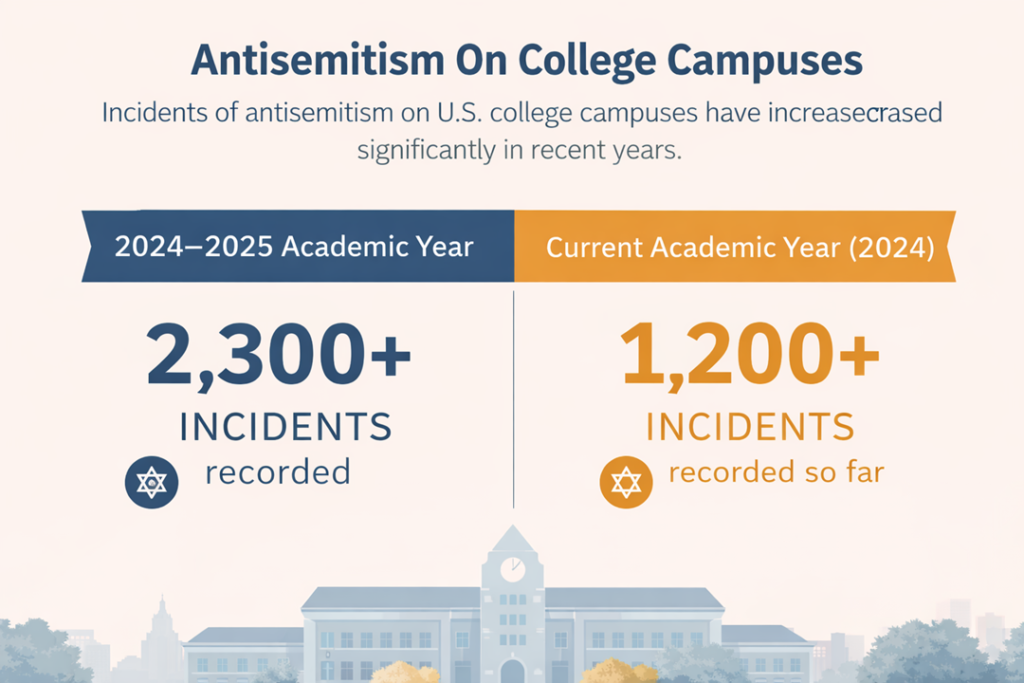
Even more recent tracking shows that over 1,200 incidents have already been reported during the current academic year, illustrating that the issue remains ongoing.
These incidents range from harassment and vandalism to online intimidation and hostile demonstrations. While violent incidents remain relatively rare, the cumulative effect of repeated discrimination can significantly influence how students experience campus life.
For universities committed to inclusive learning environments, understanding these patterns is a crucial first step toward effective response.
Key Indicators Universities Use To Evaluate Campus Climate
Universities and research organizations typically analyze campus climate through a set of measurable indicators that reflect both safety and inclusion.
| Indicator | What It Measures |
|---|---|
| Administrative response policies | How institutions respond to discrimination complaints |
| Student safety resources | Availability of reporting systems and support services |
| Campus climate surveys | Student perceptions of safety and belonging |
| Community engagement programs | Interfaith and cultural dialogue initiatives |
| Incident tracking systems | Monitoring discrimination and harassment patterns |
These indicators allow institutions to evaluate both structural policies and everyday student experiences.
Balancing Free Expression And Student Protection
One of the most complex challenges universities face is balancing two foundational principles: free expression and student safety.

Campus protests, political activism, and academic debate are longstanding components of university culture. At the same time, institutions are legally and ethically responsible for ensuring that students are not subjected to harassment or discrimination.
This tension has been particularly visible in recent debates surrounding international conflicts and political activism on campus. Some critics argue universities have failed to respond decisively to harassment, while others warn against policies that might suppress legitimate political expression.
Universities therefore face the difficult task of protecting both open discourse and inclusive learning environments.
Policy Responses Emerging Across Higher Education
In response to recent reports and investigations, universities across the United States are implementing new strategies to address campus climate concerns.
Common policy responses include:
- Expanded bias reporting systems
- Increased campus security and support services
- Mandatory training programs addressing antisemitism and other forms of discrimination
- Strengthened codes of conduct governing harassment and intimidation
Some institutions are also developing advisory groups that include students, faculty, and community representatives to guide policy responses.
These initiatives reflect a growing recognition that campus climate cannot be addressed through disciplinary policies alone. Sustained cultural change often requires institutional dialogue and educational programming.
The Role Of Student Experience In Campus Climate Assessments
Data reports provide important insights, but student experiences remain central to understanding campus climate. Surveys and listening sessions frequently reveal how students interpret institutional responses and whether they feel supported by university leadership.
In some cases, students report that official policies do not fully reflect their everyday experiences. In others, visible administrative actions—such as public condemnations of discrimination or increased support resources—improve perceptions of safety.
These perspectives illustrate the importance of incorporating student feedback into campus climate reforms. As discussed in earlier analysis on participatory decision-making in education, student perspectives can offer valuable insight into how policies affect learning environments in practice.
Inclusion Beyond Compliance
Addressing antisemitism on campus is not solely a matter of compliance with civil rights regulations. It is also a test of whether universities can sustain inclusive environments amid political and social complexity.
True inclusion requires institutions to move beyond reactive responses. It involves proactive efforts to foster respectful dialogue, strengthen cross-community relationships, and ensure that students from all backgrounds feel secure participating in academic life.
Universities that approach campus climate as an ongoing institutional responsibility rather than a crisis response are more likely to build durable systems for inclusion.
What The Reports Mean For The Future Of Higher Education
Recent antisemitism reports reveal an education system navigating a period of significant change. Universities are confronting complex questions about safety, inclusion, free expression, and institutional accountability.
While the latest data shows evidence of progress in some areas, the persistence of discrimination incidents underscores the need for continued attention.
Ultimately, campus climate is shaped not only by policies but by institutional culture. Universities that invest in transparent reporting systems, inclusive dialogue, and student engagement are better positioned to address emerging challenges.
The broader lesson is clear: ensuring safe and inclusive campus environments requires sustained commitment, thoughtful policy design, and active participation from the entire academic community
James develops culturally responsive teaching frameworks and equity audit tools used by
over 150 school districts. A former high school teacher, he brings classroom experience to…