

Education reform frequently focuses on curriculum standards, assessment systems, funding formulas, and administrative structures. While these elements shape the educational landscape, one group most affected by these policies is often underrepresented in the decision-making process: students themselves. Students experience school policies daily. They navigate classroom expectations, disciplinary procedures, curriculum structures, and institutional culture. Yet historically,…
Education reform frequently focuses on curriculum standards, assessment systems, funding formulas, and administrative structures. While these elements shape the educational landscape, one group most affected by these policies is often underrepresented in the decision-making process: students themselves.
Students experience school policies daily. They navigate classroom expectations, disciplinary procedures, curriculum structures, and institutional culture. Yet historically, their insights have rarely been incorporated into formal reform processes.
This gap creates a disconnect between policy design and lived educational experience. When reforms are developed without student input, they may overlook barriers affecting engagement, belonging, or learning outcomes.
Recognizing the importance of student voice shifts reform conversations toward a more inclusive and responsive model of educational governance.
Understanding Student Voice In Policy And School Governance
Student voice refers to the meaningful inclusion of student perspectives in decisions that shape educational environments. It extends beyond occasional feedback surveys or student government activities.
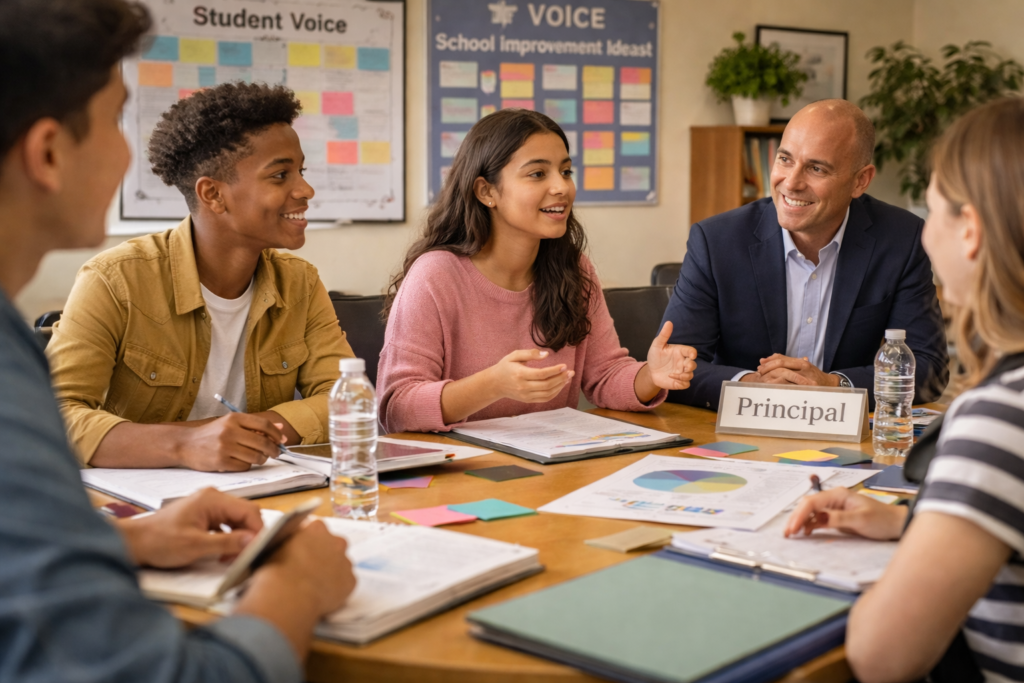
Participatory decision-making frameworks invite students to contribute ideas, identify challenges, and collaborate in shaping solutions. These processes can occur at multiple levels, including classroom design, school policy development, district initiatives, and broader education reform discussions.
When implemented thoughtfully, student participation can provide valuable insights into how policies affect learning environments in practice.
Involving students in governance does not replace educator expertise or administrative leadership. Instead, it complements those perspectives by integrating the experiences of those directly engaged in the learning process.
Research Supporting Participatory School Governance
Research in educational leadership and school climate consistently highlights the benefits of student participation. When students feel heard and respected within their educational communities, they are more likely to develop a sense of belonging and responsibility.
The OECD’s research on student participation in school decision-making emphasizes that inclusive governance structures can strengthen democratic skills, improve engagement, and enhance the effectiveness of institutional policies.
Participation also supports broader educational goals. Students who contribute to policy discussions gain experience in collaboration, civic dialogue, and critical thinking—skills that extend beyond the classroom.
These outcomes illustrate that student voice contributes not only to school improvement but also to long-term civic development.
How Schools Implement Student Voice Mechanisms
Schools increasingly adopt structured approaches for incorporating student perspectives into decision-making processes. These mechanisms vary depending on institutional capacity and governance models.
Common approaches include:
- Student advisory councils connected to school leadership
- Participatory policy review committees including students
- Collaborative curriculum feedback groups
- Student representation on school improvement teams
These initiatives allow students to contribute insights on topics ranging from school climate to instructional strategies.
Effective participation frameworks ensure that student feedback is not merely collected but integrated into actual policy discussions.
The Relationship Between Student Voice And Engagement
Student participation in governance can also influence academic engagement. When students see that their perspectives matter, they are more likely to invest in the learning community.
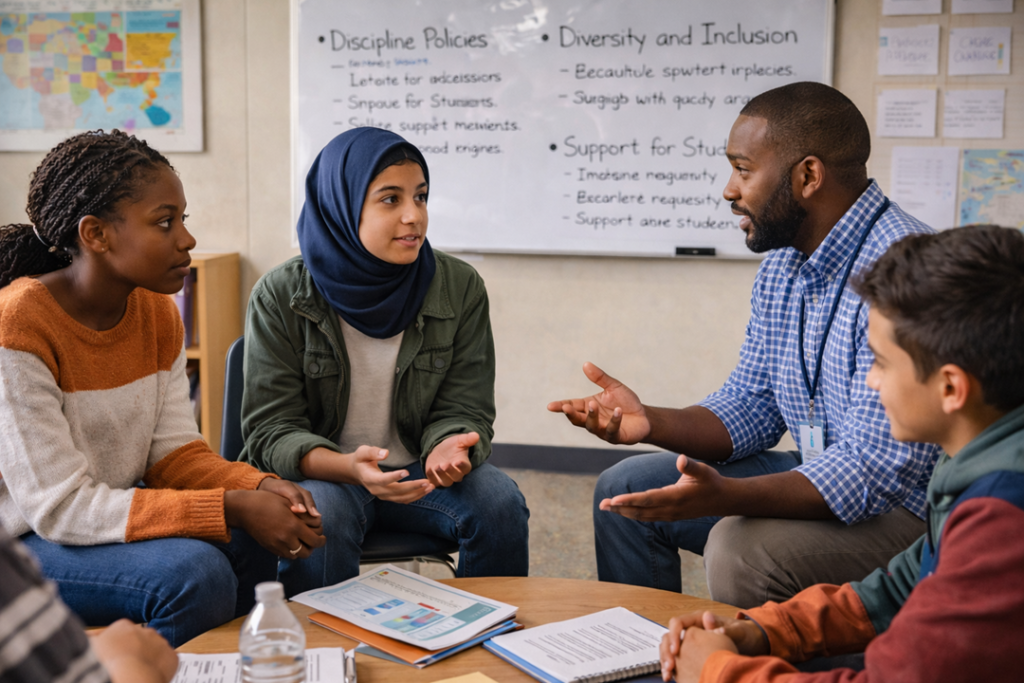
Engagement is often shaped by factors beyond curriculum content. School culture, relationships with educators, and perceptions of fairness all influence whether students feel connected to the educational environment.
Participatory systems can strengthen these connections. When students collaborate with educators to improve school practices, they develop a stronger sense of ownership in the educational process.
This dynamic also aligns with broader strategies aimed at reducing disengagement. As discussed in previous analysis on chronic absenteeism prevention strategies, strengthening student connection to school environments plays a critical role in improving attendance and long-term academic persistence.
Equity Implications Of Student Participation
Student voice also intersects with questions of educational equity. Historically marginalized student populations may face barriers that are not always visible to administrators or policymakers.
Participatory decision-making creates opportunities to surface these experiences. Students can highlight challenges related to curriculum representation, disciplinary practices, resource access, or classroom climate.
When these perspectives are incorporated into reform efforts, policies become more responsive to diverse educational needs.
Importantly, equity-focused participation requires intentional outreach. Schools must ensure that student representation reflects the diversity of the student body rather than only the voices of the most visible student leaders.
Institutional Structures That Support Student Participation
Building sustainable student voice initiatives requires institutional commitment. Schools that successfully incorporate participatory governance often establish formal structures to guide student involvement.
These structures may include:
- Scheduled consultation sessions between students and school leadership
- Policy review panels including student representatives
- Structured feedback systems integrated into school improvement planning
Formal frameworks help ensure that participation is consistent and meaningful rather than symbolic.
Additionally, educators often provide mentorship and facilitation to help students navigate policy discussions and articulate their perspectives effectively.
James develops culturally responsive teaching frameworks and equity audit tools used by
over 150 school districts. A former high school teacher, he brings classroom experience to…