
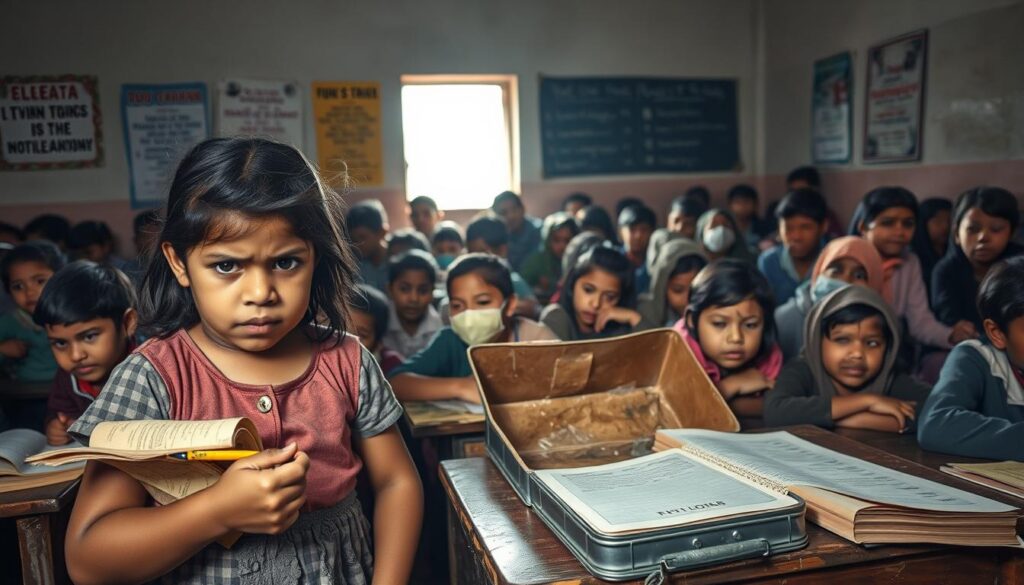
Let’s talk about the elephant in the classroom that nobody wants to acknowledge. Poverty isn’t just an economic condition – it’s an educational pandemic playing out in real time across American schools.Imagine trying to solve quadratic equations when your stomach’s growling louder than the teacher’s instructions. The data hits harder than a pop quiz on…
Let’s talk about the elephant in the classroom that nobody wants to acknowledge. Poverty isn’t just an economic condition – it’s an educational pandemic playing out in real time across American schools.
Imagine trying to solve quadratic equations when your stomach’s growling louder than the teacher’s instructions. The data hits harder than a pop quiz on Monday morning: we’re talking about 13 million kids navigating poverty while trying to master algebra.
It’s like asking someone to run a marathon with weights tied to their ankles and then being surprised when they don’t break records. The cognitive deficits manifest in verbal skills that trail behind, IQ scores that tell a story of unequal starting lines, and dropout rates that should make us all blush with shame.
The gap between rich and poor continues to grow, creating what experts call ‘relative deprivation’ among poor children. And let’s not forget the health impacts – growth retardation, lead exposure, obesity – because apparently being poor means your body gets to participate in this systemic disadvantage too.
This isn’t just about test scores. It’s about how poverty in schools creates an uneven playing field where some students start five years behind in reading before they even learn to tie their shoes. The educational equivalent of playing chess where your opponent starts with extra queens and you’re missing half your pawns.
School Nutrition Programs
Let’s be real for a moment. How do we expect kids to solve complex math when their stomachs are growling?
Research shows that home environment plays a huge role in cognitive development. It’s like sending students into battle with half their ammo missing.
Poor communities face a tough triple threat: nutritional gaps, environmental toxins, and disorganization. It’s like playing chess with your opponent controlling two-thirds of the board.
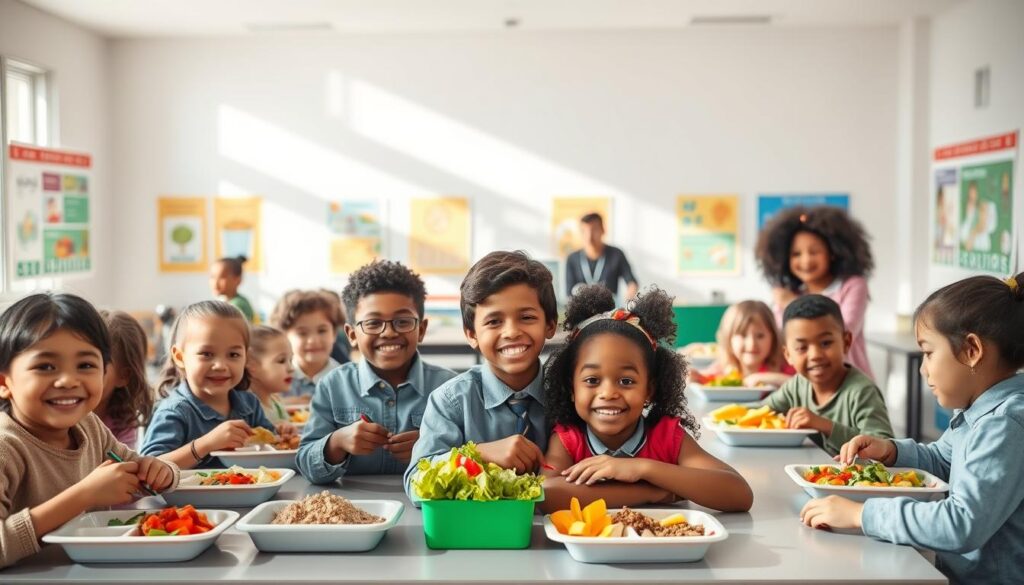
School lunch programs are more than just food. They’re a way to level the playing field.
Maybe we should focus on nutrition before testing. Hungry minds can’t learn complex texts – they’re too busy waiting for lunch.
This isn’t just about feeding bodies. It’s about giving minds the fuel they need to fight the socioeconomic gap from the start.
Wraparound Supports
Imagine trying to fix systemic poverty in schools with a plastic spork. Schools provide 70-80% of psychosocial services. We’ve made math teachers into therapists because the system can’t get its act together.
The ecological model approach is brilliant. It treats mental health while fixing the environment. Research shows something revolutionary: helping kids succeed academically improves their social functioning. Who knew?
Programs like PBIS show what happens when we stop putting bandaids on bullet wounds. It’s about creating schools that support human beings, not just educate minds. Instead of asking why kids fail, we should ask what supports they need to succeed.
Family Engagement
Welcome to the educational world’s most awkward dance. Everyone knows the steps, but nobody’s quite following the rhythm.
Here’s the brutal truth: poverty doesn’t just impact students. It decimates the entire support structure around them.

High-poverty schools have principals with the tenure of mayflies. Teachers turnover like a revolving door at a busy hotel. How do you build relationships when the relationship builders keep disappearing?
The socioeconomic education gap isn’t just about test scores. It’s about the chasm between schools with stable leadership and those with permanent “Under New Management” signs.
When you’re working three jobs to keep lights on, PTA meetings aren’t top priority. Families care – the system just makes caring look like a luxury item.
We need to stop asking why families aren’t engaged. Instead, let’s ask how schools can engage with the reality of these families’.
It’s time to flip the script on this entire conversation.
Funding the Future Beyond Property Tax Pitfalls
Our school funding system is like a Monopoly game, where some start with an advantage and others are at a disadvantage. Relying on local property taxes to fund schools means that the poverty in schools issue gets worse. Wealthy areas build better schools, which raises property values and funds even more expensive schools.
The data shows a clear educational divide. Schools in poor areas struggle to keep teachers, with many new and less experienced ones. These schools also have fewer advanced degree holders. It seems that poverty somehow drains the intelligence from most students.
Racial disparities make things even worse. Schools with more students of color get new teachers at a higher rate than schools with mostly White students. This is not a mistake; it’s a sign of deep neglect.
To fix this, we need to change how we fund schools. We should use weighted funding that accounts for extra challenges, not just equal funding. Grants should aim to solve the socioeconomic education gap at its roots, not just treat its symptoms.
Research from Enago Academy highlights the need for a big change. We must fund schools based on what students need, not on how rich the neighborhood is. The future of education depends on breaking these cycles, not just keeping them going.
James develops culturally responsive teaching frameworks and equity audit tools used by
over 150 school districts. A former high school teacher, he brings classroom experience to…