
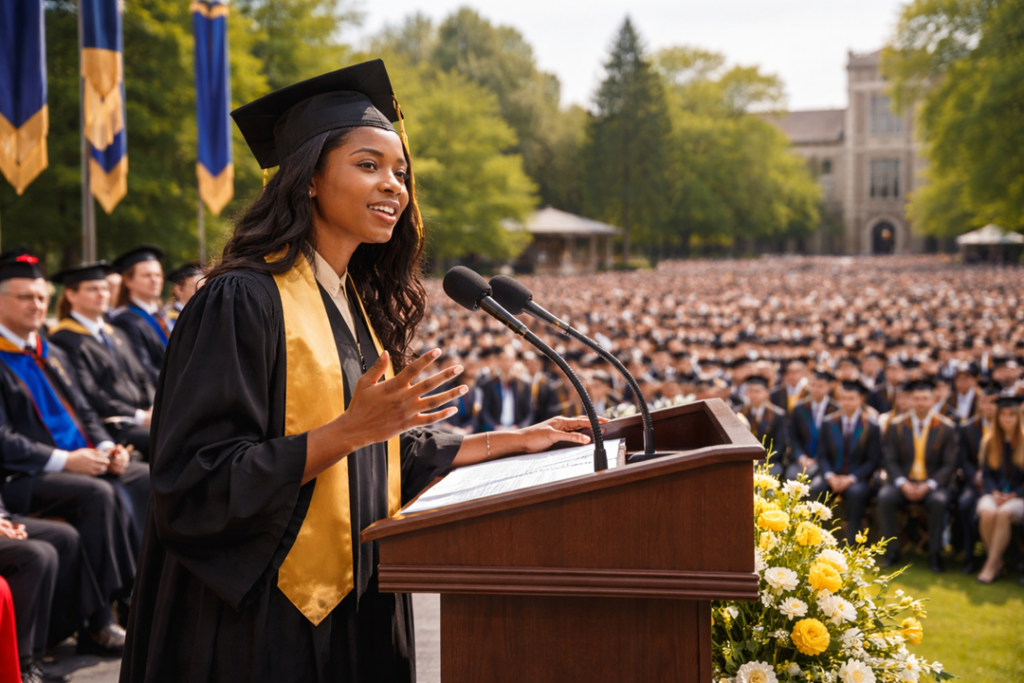
Commencement ceremonies are among the most symbolic moments in higher education. Universities gather students, faculty, families, and alumni to celebrate academic achievement and mark the transition from student life into broader civic participation. Traditionally, student speeches during graduation ceremonies reflect gratitude, reflection, and shared memories. Yet in recent years, commencement stages have increasingly become platforms…
Commencement ceremonies are among the most symbolic moments in higher education. Universities gather students, faculty, families, and alumni to celebrate academic achievement and mark the transition from student life into broader civic participation.
Traditionally, student speeches during graduation ceremonies reflect gratitude, reflection, and shared memories. Yet in recent years, commencement stages have increasingly become platforms for political expression and social commentary.
Controversies surrounding student speeches have sparked a broader debate: should universities regulate what graduating students say during these highly visible events?
Some institutions have introduced stricter guidelines or speech review processes, citing concerns about campus climate and public controversy. Others argue that restricting student messages undermines core academic values of open dialogue and intellectual freedom.
The result is an evolving conversation about how universities balance institutional responsibilities with students’ rights to express their perspectives.
The Role Of Commencement In University Culture
Commencement ceremonies serve multiple purposes within the academic tradition. They celebrate individual achievement while reinforcing shared institutional identity.
At many universities, the ceremony includes speeches by faculty leaders, invited keynote speakers, and students selected to represent the graduating class. These student speakers often reflect on collective experiences, academic growth, and the social context in which their class studied.
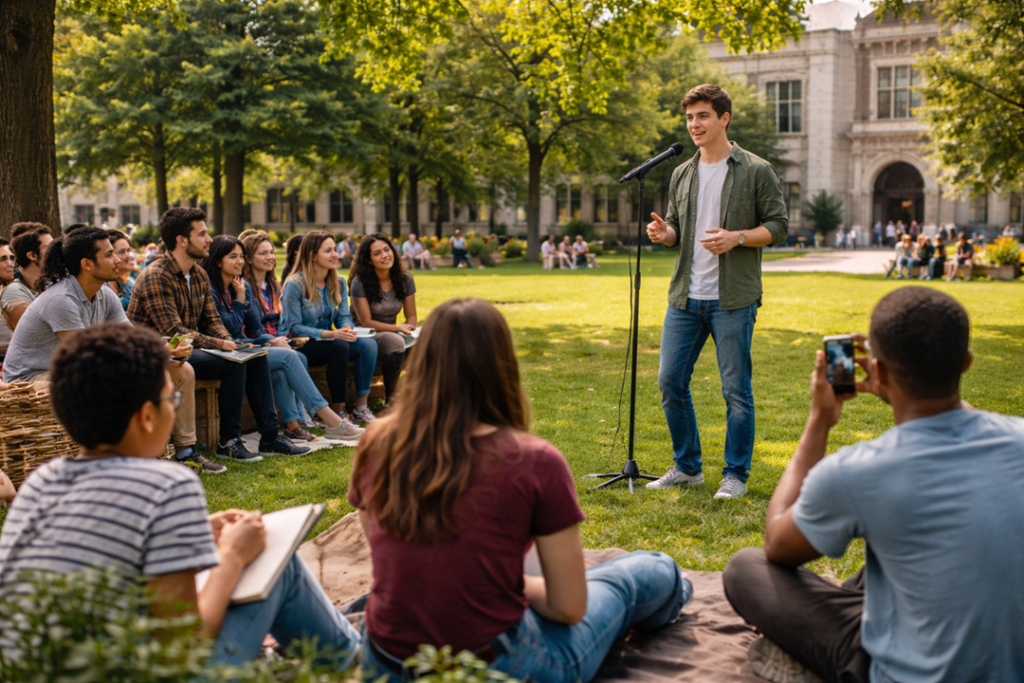
Student participation is not merely ceremonial. Many institutions hold competitive processes to select commencement speakers, recognizing them as representatives of their graduating cohort.
Because these speeches are delivered before large audiences and frequently shared online, they often carry significant symbolic weight.
Recent Controversies Around Student Commencement Speeches
Recent events have intensified debate over whether universities should regulate graduation speeches. In one widely discussed case, a graduating student’s commencement address criticizing international political actions prompted backlash and disciplinary action from the university.
Supporters of the student argued that graduation speeches should allow personal expression and civic engagement. Critics contended that the remarks created division and misused an institutional platform meant for celebration.
These conflicts illustrate how commencement speeches increasingly intersect with broader social and political debates. Universities must decide whether the ceremony should remain politically neutral or serve as a forum for student voices addressing contemporary issues.
The Legal Framework Behind Campus Speech
The debate over commencement speeches also reflects broader questions about free speech rights in higher education.
At public universities, student speech is generally protected under the First Amendment. Restrictions imposed by institutions may be considered unconstitutional if they limit expression based solely on viewpoint.
However, universities also maintain authority over official institutional events. Administrators often argue that graduation ceremonies represent the institution itself, meaning speech delivered in that context may be subject to certain guidelines.
Legal scholars frequently describe campus speech as a balance between two principles: protecting freedom of expression while ensuring that university functions remain orderly and inclusive.
How Universities Attempt To Regulate Commencement Speeches
Universities employ several strategies to manage potential controversies related to student speeches.
| Policy Approach | Purpose |
|---|---|
| Speech review processes | Ensure remarks align with ceremony guidelines |
| Pre-recorded speeches | Prevent unexpected statements during live events |
| Clear speaker agreements | Establish expectations for student presenters |
| Alternative student forums | Encourage dialogue outside formal ceremonies |
These approaches aim to reduce institutional risk while preserving opportunities for student participation.
However, each strategy raises questions about how much oversight universities should exercise over student expression.
Free Speech Versus Institutional Responsibility
Universities operate in a complex environment where multiple stakeholders hold different expectations. Students may view commencement speeches as opportunities for authentic self-expression, while administrators must consider institutional reputation and campus safety.
Many education leaders argue that universities must protect the principle of open inquiry while maintaining environments where all students feel included. Scholars examining campus speech policies emphasize that institutions must constantly negotiate this balance.
A speech that inspires one audience member may alienate another. Universities therefore face the challenge of supporting free dialogue without allowing official events to become sources of conflict or exclusion.
Student Voice And Democratic Participation
The debate surrounding graduation speeches also connects to broader conversations about student participation in institutional decision-making.

Universities frequently emphasize civic engagement as a core educational outcome. Encouraging students to articulate perspectives, debate ideas, and participate in public discourse reflects these goals.
At the same time, institutions must consider how student speech interacts with community standards and shared academic values.
This tension echoes earlier discussions about student leadership in education reform, where participatory dialogue is often viewed as essential for strengthening institutional legitimacy.
Graduation speeches represent one of the most visible examples of student voice within academic life.
The Impact Of Public Attention And Social Media
Modern commencement controversies rarely remain confined to campus communities. Social media platforms can amplify speeches instantly, bringing national attention to individual remarks.
A speech delivered to a graduating class may quickly circulate online, attracting commentary from political leaders, advocacy groups, and news organizations.
This heightened visibility has led some universities to adopt more cautious approaches to student speeches. Administrators often worry that a single moment on stage could trigger widespread public scrutiny.
Yet critics argue that avoiding controversy should not come at the cost of suppressing student perspectives.
The Future Of Commencement Speech Policies
As debates about free expression continue across higher education, commencement speech policies are likely to evolve.
Some institutions may continue implementing review processes or guidelines to ensure that ceremonies remain celebratory and inclusive. Others may emphasize student autonomy, allowing speakers greater freedom to express their views.
The challenge lies in maintaining a balance between tradition, institutional responsibility, and student expression.
Commencement ceremonies symbolize the culmination of a university education. They celebrate not only academic achievement but also the development of informed citizens capable of engaging with complex social questions.
Whether universities regulate student messages or embrace open expression, the debate itself reflects a deeper truth about higher education: the classroom extends far beyond lecture halls, and the lessons of civic dialogue often emerge in the most public moments of academic life.
James develops culturally responsive teaching frameworks and equity audit tools used by
over 150 school districts. A former high school teacher, he brings classroom experience to…