

Recent events at the University of Alabama, where student publications centered on Black and women’s perspectives were reportedly shut down, have reframed student media as more than an extracurricular activity. Instead, these platforms are increasingly recognized as spaces where civil rights, representation, and institutional accountability intersect. What was once viewed as a question of editorial…
Recent events at the University of Alabama, where student publications centered on Black and women’s perspectives were reportedly shut down, have reframed student media as more than an extracurricular activity. Instead, these platforms are increasingly recognized as spaces where civil rights, representation, and institutional accountability intersect.
What was once viewed as a question of editorial control or funding allocation is now being interpreted through a civil rights lens. When student publications that amplify marginalized voices are limited or removed, the issue extends beyond free expression into questions of equity, access, and institutional responsibility.
This shift signals that student media is no longer peripheral to campus life—it is central to how universities demonstrate their commitment to inclusion and democratic participation.
Free Expression Versus Institutional Control
Universities have long balanced student free speech with institutional oversight. However, recent controversies suggest that this balance is becoming more fragile, particularly when student media addresses sensitive or politically charged issues.
The University of Alabama case highlights a recurring tension: to what extent can institutions regulate student-run publications without infringing on constitutional protections or creating inequitable conditions for expression?
Public universities, in particular, are bound by First Amendment obligations. Yet administrative decisions—such as defunding, restructuring, or dissolving student publications—can have similar effects to direct censorship, even when framed as operational changes.
According to First Amendment protections for student media outlined by organizations like the Student Press Law Center, universities must ensure that policies do not disproportionately silence specific groups or viewpoints, especially when those groups already face systemic underrepresentation.
Representation As A Civil Rights Concern
The central issue in many of these cases is not simply whether speech is restricted, but whose speech is affected. Student publications often serve as critical platforms for communities that are underrepresented in mainstream campus discourse.
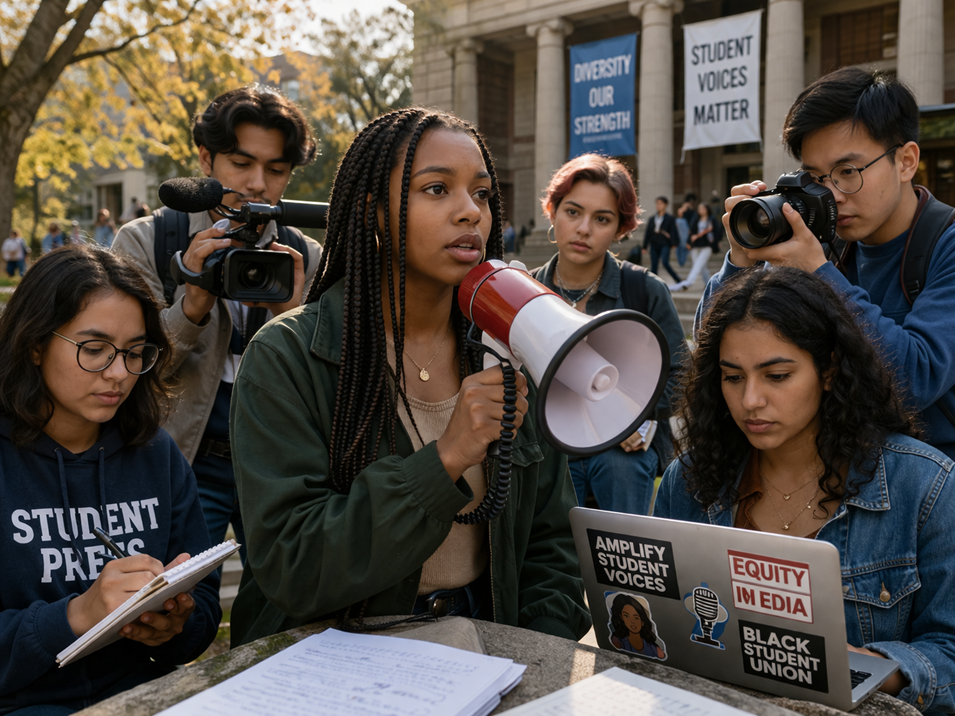
When these platforms are disrupted, the consequences are not evenly distributed. Students from marginalized backgrounds may lose one of the few institutional spaces where their experiences, concerns, and perspectives are documented and validated.
This raises a broader civil rights question: does limiting access to student media constitute a form of unequal treatment?
The table below outlines how student media intersects with equity considerations:
| Dimension | Traditional View | Emerging Civil Rights Perspective |
|---|---|---|
| Purpose of Student Media | Skill-building and journalism training | Platform for representation and advocacy |
| Institutional Oversight | Administrative management | Potential site of structural bias |
| Impact of Shutdowns | Loss of activity or funding | Disproportionate silencing of marginalized voices |
| Free Speech Framing | Individual expression rights | Collective access to voice and visibility |
This reframing positions student media not only as a communication tool but as an equity infrastructure within universities.
Student Voice, Participation, And Institutional Legitimacy
The erosion of student media spaces has broader implications for participatory governance. Universities that limit avenues for student expression risk undermining trust and weakening their legitimacy as inclusive institutions.
Student journalism often functions as an informal accountability mechanism—documenting campus issues, amplifying concerns, and fostering dialogue. When these channels are restricted, institutions may lose critical feedback loops that inform policy and practice.
This connects directly to broader conversations about participatory governance in education. As explored in discussions around student voice in decision-making, institutions that meaningfully integrate student perspectives are better equipped to anticipate conflict and address systemic issues before they escalate.
Without these structures, universities may find themselves responding to crises rather than preventing them.
Legal Risk And The Role Of Federal Oversight
The increasing number of lawsuits related to student media censorship suggests that universities are entering a new phase of legal risk. Decisions that were once considered internal matters are now subject to external scrutiny, including federal civil rights enforcement.
In the Alabama case referenced by the Associated Press, students argue that the shutdown of certain publications reflects discriminatory practices rather than neutral administrative decisions. These claims, if substantiated, could trigger broader investigations into institutional policies and practices.
Federal agencies are paying closer attention to how universities balance free expression with equity obligations. This includes evaluating whether institutional actions create disparate impacts on specific student groups—a key consideration under civil rights law.
The involvement of legal frameworks means that universities must now consider not only the intent behind their decisions, but their outcomes and impacts.
Rethinking Student Media As Infrastructure, Not Activity
One of the most important implications of recent developments is the need to rethink how student media is positioned within higher education. Rather than treating it as a discretionary activity, institutions may need to recognize it as essential infrastructure for equity and engagement.
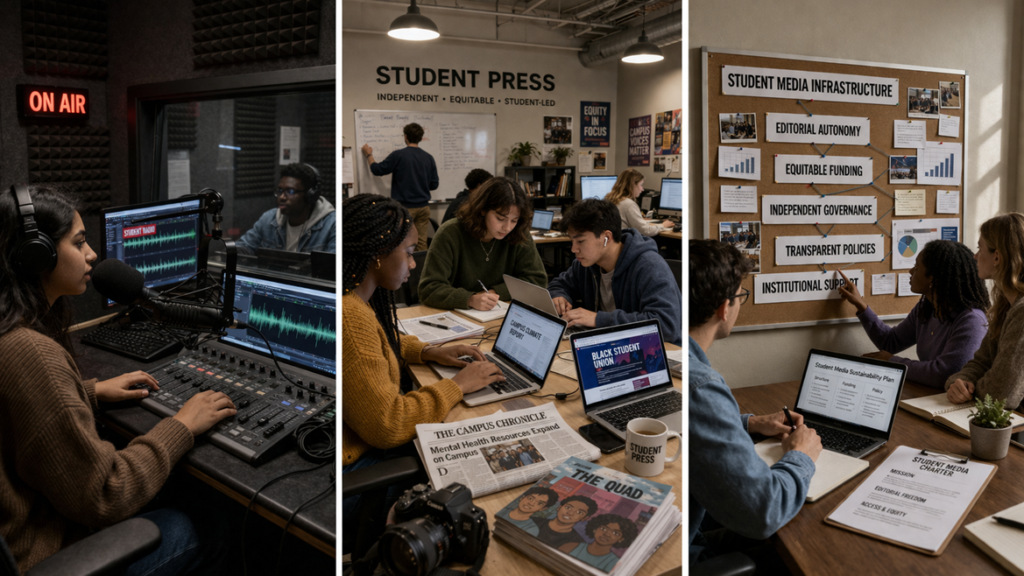
This shift requires changes in how universities allocate resources, design governance structures, and evaluate success. Student publications should not be dependent solely on administrative approval or funding cycles that can be easily altered.
Instead, institutions should consider:
- Establishing independent governance models for student media
- Ensuring equitable access to funding and resources
- Creating transparent policies that protect editorial autonomy
- Integrating student journalism into broader equity and inclusion strategies
These steps can help safeguard student media as a stable and inclusive platform for expression.
Reframing Free Expression As An Equity Issue
The emerging convergence of free speech and civil rights in student media reflects a broader transformation in higher education policy. Expression is no longer viewed solely as an individual right, but as a collective condition shaped by access, representation, and institutional support.
Universities that fail to recognize this shift risk reinforcing inequities, even when acting within traditional frameworks of governance. Those that adapt, however, have an opportunity to strengthen both democratic participation and institutional trust.
As student media continues to evolve, it will play a critical role in defining how universities navigate the complex relationship between expression, equity, and accountability.
James develops culturally responsive teaching frameworks and equity audit tools used by
over 150 school districts. A former high school teacher, he brings classroom experience to…